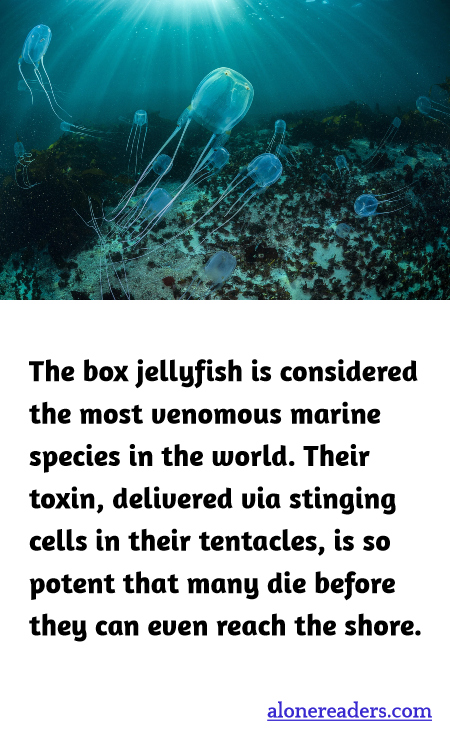
The box jellyfish, arguably one of the most dangerous creatures lurking in the ocean, embodies a lethal threat, particularly in the waters of the Pacific and Indian oceans. Often almost transparent, these gelatinous creatures can be hard to spot, making them all the more hazardous. Their venom, which is among the most deadly in the world, is delivered through tiny, harpoon-like cells in their tentacles called nematocysts.
Capable of firing their venom in response to the slightest touch, box jellyfish inflict pain that has been described as excruciating and overwhelming. The venom is a complex mix of toxins that attack the heart, nervous system, and skin cells. Such a potent combination can cause effects ranging from intense pain to rapid heart rate, overwhelming the body's systems and potentially leading to death within minutes if untreated. Alarmingly, many victims, incapacitated by pain, may drown or be incapacitated before they can get back to shore or receive antivenom treatment.
Despite their fearsome reputation, understanding box jellyfish behavior and ecology is crucial for medical research and developing better antivenoms. From November to April, during the box jellyfish's peak season, signs are posted on many beaches to warn swimmers of their presence. Furthermore, lifeguards in areas known for box jellyfish have vinegar at their stations; an effective first aid treatment that disables the jellyfish's nematocysts from releasing more venom.
Environmental changes are influencing jellyfish populations, potentially leading to more encounters with humans. As coastal regions become warmer and more developed, their traditional habitats are being altered, pushing these creatures closer to human activity. This development urges a greater awareness and education concerning the risks of box jellyfish and how to handle stings effectively.
Though incredibly dangerous, box jellyfish are a fascinating part of marine biodiversity, highlighting the delicate balance between ocean health and human activity. Their presence in the water, while menacing, is a natural part of the marine ecosystem and serves as a stark reminder of the wild and often untamed nature of the sea, underscoring the importance of respecting and preserving our natural world.
