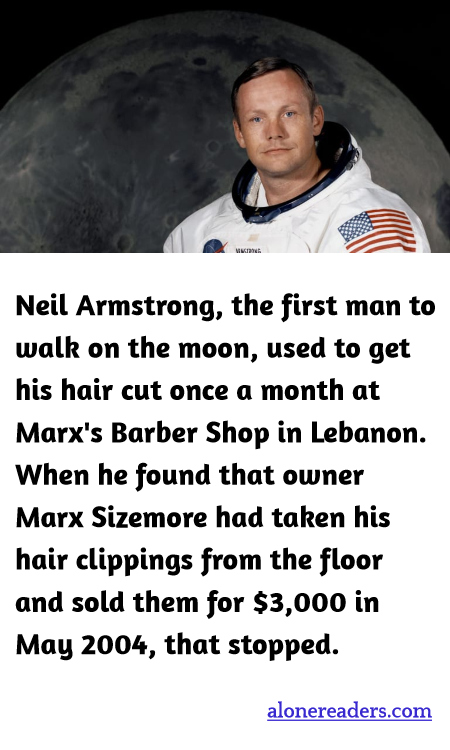
Neil Armstrong, celebrated globally as the first man to set foot on the moon, was known for his humble and private nature. Despite his monumental fame, Armstrong preferred a simple life, which included getting his hair cut at a local barber shop in his Ohio hometown. For years, he frequented Marx's Barber Shop in Lebanon, Ohio, where Marx Sizemore, the shop's owner, served as his barber. This routine barber-client relationship took an unexpected turn when Sizemore capitalized on Armstrong's fame in a way that breached Armstrong's trust.
In May 2004, it came to light that Sizemore had collected Armstrong’s hair clippings from the floor of his barber shop and sold them. The hair, a seemingly trivial remnant of Armstrong's visits to the shop, was purchased for $3,000 by a collector eager to own a piece of history associated with the first moonwalker. When Armstrong learned about the sale of his hair, he was notably displeased. He contacted his barber to express his discontent and requested that Sizemore either retrieve the hair to return it or donate the proceeds to a charity.
The incident highlights an intriguing aspect of fame. Neil Armstrong's hair, in any other circumstance, would have been disposed of without a second thought. However, tied as it was to a historical figure of Armstrong's stature, it gained significant value. The sale and the subsequent fallout underline the complexities that can arise when the personal aspects of public figures' lives are commodified without their consent.
After the incident, Armstrong ceased his visits to Marx's Barber Shop, marking the end of what had been a routine aspect of his life in Lebanon. The event serves as a reminder of the privacy challenges faced by public figures and the unexpected ways in which their personal lives can become public commodities. Armstrong continued to maintain a low profile until his death in 2012, consistent with his characteristically reserved nature throughout his later years.
