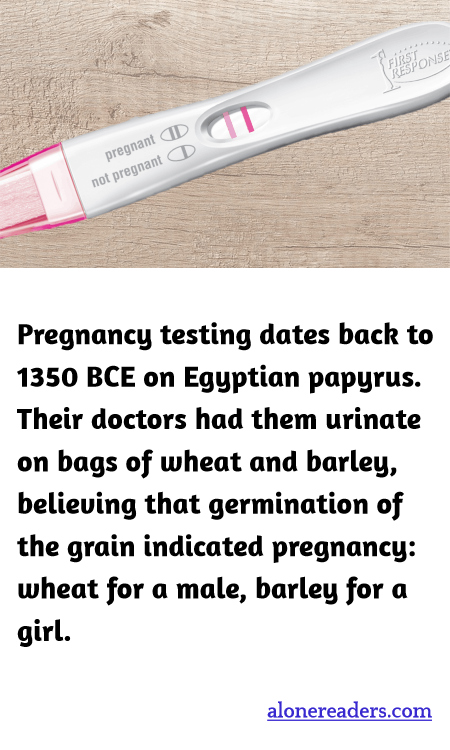
Pregnancy testing has evolved significantly from its ancient origins, with intriguing techniques utilized in historical cultures around the world. Perhaps one of the most fascinating ancient pregnancy tests can be traced back to 1350 BCE in Egypt. Historical documents, such as the Ebers Papyrus, detail how Egyptian women would determine their pregnancy status by urinating on wheat and barley seeds. This method was grounded in the belief that if the seeds germinated, the woman was pregnant; the type of seed that sprouted was even thought to predict the baby's sex—wheat for a boy and barley for a girl.
Such early biological tests were based on keen observations of the natural world, where hormonal changes in a woman’s urine, specifically the presence of the hormone now known as human chorionic gonadotropin (hCG), were believed to promote seed germination. Researchers have tested this ancient method with some degree of success, indicating there might have been some scientific basis behind this empirical wisdom. In 1963, the theory was put to the test in a study published in the journal "Lancet", where researchers found that an astonishing 70% of the time, the urine of pregnant women did indeed cause the seeds to germinate faster than the urine from non-pregnant women.
Transitioning from ancient times to the present, pregnancy testing has become considerably more sophisticated and accurate. Today’s tests typically involve the detection of hCG through chemical means. Modern pregnancy tests, which can be purchased over-the-counter in pharmacies across the globe, offer quick and reliable results without the wait for seeds to sprout. These current methods reflect significant advancements in medical and chemical sciences, providing user-friendly, accessible, and highly accurate tools for women to confirm pregnancy early and conveniently.
Yet, despite these technological advancements, the exploration of historical practices like that of the Egyptian papyrus reminds us of humanity's longstanding quest to understand and predict pregnancy. It underscores a deep-rooted curiosity and ingenuity which continues to drive medical innovation today. As we look back on these practices, it becomes clear that while the tools and technologies have changed, the fundamental desire to uncover the mysteries of life remains a constant pursuit through the ages.
