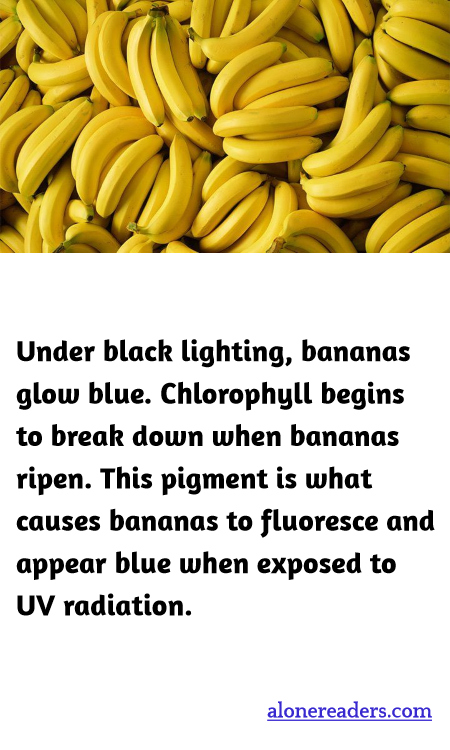
When bananas ripen, an intriguing phenomenon can be observed under ultraviolet light, also known as black light. As they mature, bananas emit a fascinating blue glow, a spectacle that owes its origins to the degradation of chlorophyll. Chlorophyll is the green pigment vital for photosynthesis, primarily responsible for the absorption of light to provide energy for plants. In the life cycle of a banana, the chlorophyll begins to break down as the fruit ripens. This degradation process involves the breakdown of chlorophyll into various derivative compounds.
These by-products are fluorescent under UV light and emit a bright blue glow. The phenomenon makes bananas exceptional tools for scientific education and demonstrations in fluorescence. UV radiation, which is invisible to the naked eye, excites substances like these chlorophyll breakdown products. When these substances return to their normal state, they release energy in the form of visible light, hence the glowing effect.
The blue glow of bananas is not only a cool party trick but also serves a more scientific purpose. It provides a visually engaging way to understand ripening processes and the changes in biochemical compositions during fruit aging. Additionally, this characteristic can be used to assess the ripeness of bananas without damaging the fruit, useful in both agricultural settings and grocery supply chains to ensure optimal quality and flavor of the bananas reaching consumers. This glowing attribute of bananas under black light is a profound example of how everyday phenomena can illuminate the complex processes occurring in nature, offering an intersection of scientific intrigue and natural wonder.
