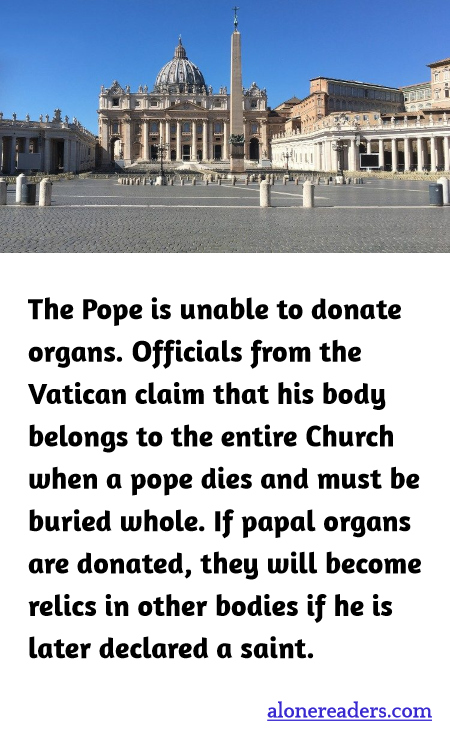
The limitations on organ donation by the Pope stem from unique doctrinal and traditional beliefs within the Catholic Church. According to Vatican officials, upon the death of a pope, his body inherently belongs to the entire Church and, therefore, must remain intact. The concern is that if a pope were to donate his organs, and he were subsequently canonized as a saint, those organs would become relics residing within other individuals. This presents a complex scenario, contrasting with the typical posthumous reverence of saints’ relics, which are usually kept in reliquaries and churches for veneration.
This stance underscores the distinctive view of the pope’s physical body not merely as personal property but as a vessel of broader, communal spiritual significance. Throughout history, the bodies of saints and martyrs have been treated with great reverence, often preserved in churches for veneration. Following this tradition, the integrity of a pope’s body is preserved as a potential relic, intact and whole, in anticipation of possible future sainthood.
Moreover, the Church’s policy highlights ethical considerations around the dignity of the human body and the sanctity attributed to the pope's role as the Vicar of Christ on earth. While the Church broadly supports and promotes organ donation as an act of charity and a means of saving lives, the pope's unique position makes his situation exceptional.
By maintaining the sanctity and wholeness of the pope’s body, the Vatican not only adheres to its theological principles and traditions but also ensures that the physical remains of the pope can be treated with the ceremonial respect and devotional practices deemed appropriate for someone who played such a significant role in the spiritual leadership of millions of followers worldwide. This practice, while distinct from the norms of organ donation encouraged for laypeople, reflects the intricate interplay of theology, tradition, and ethical considerations that characterize the Catholic Church’s approach to matters of life and death.
