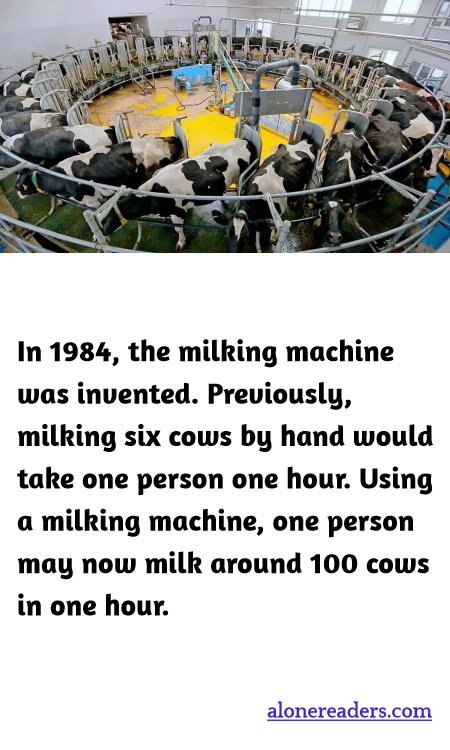
In a remarkable stride forward during 1984, the introduction of the milking machine revolutionized dairy farming, offering a solution that greatly expanded efficiency in milking large herds. Prior to this innovation, the process of milking cows was labor-intensive and time-consuming, with one person spending about an hour to manually milk just six cows. This method not only demanded significant physical effort but also limited the scale of operations that a dairy farmer could manage effectively.
With the advent of the milking machine, the entire landscape of dairy farming underwent a dramatic transformation. This invention enabled a single person to milk approximately 100 cows in the same amount of time it previously took to milk six, marking a significant leap in productivity and operational capacity. The device functions by attaching suction cups to the cow’s udders, which gently draw the milk into a sanitarily sealed collection system. This ensures both efficiency and hygiene, reducing the physical strain on the workers and the cows, and minimizing the risk of milk contamination.
The broader impacts of the milking machine on the dairy industry have been profound. Dairy farms could now manage larger herds, thereby increasing their output and profitability. This scalability has also contributed to the stabilization of milk prices and facilitated a consistent supply in response to growing consumer demand. Furthermore, the technology has evolved to include automated milking systems, which incorporate advanced features like computer monitoring and data analytics to optimize milk yield and monitor cow health in real time.
Overall, the invention of the milking machine in 1984 was a pivotal development that not only enhanced dairy farming productivity but also improved animal welfare and product quality. This innovation continues to be a cornerstone of modern dairy operations, illustrating how technological advancements can drive industry transformation and support sustainable agricultural practices.
