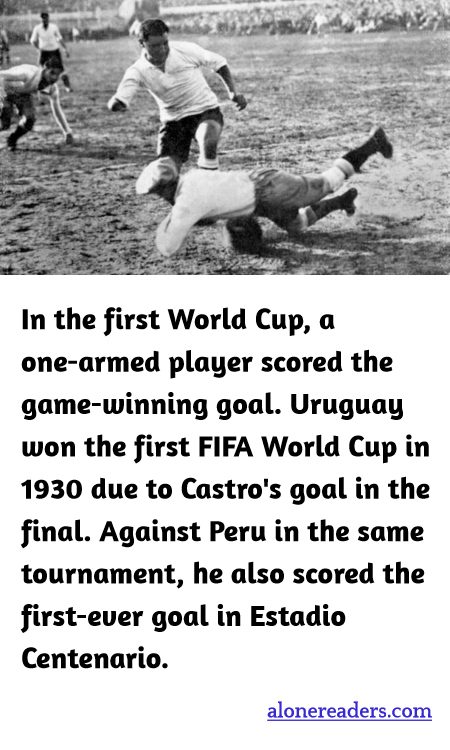
The story of the first FIFA World Cup in 1930 is filled with historic milestones and intriguing tales, one of which is the remarkable feat accomplished by Héctor Castro, a one-armed Uruguayan footballer. The tournament, hosted by Uruguay, culminated in a series of exciting matches that showcased emerging global talents in football. Uruguay, already a two-time Olympic Champion, was both the favorite and the eventual winner, setting the stage for what would become the world’s most watched and revered sporting event.
Héctor Castro, whose full name was Héctor Scarone Castro, played a pivotal role in this. Known as "El Divino Manco" (the Divine One-Armed Man) due to his amputation - he had lost his right forearm in a childhood accident involving a saw - Castro did not let this impede his football career. In the final match against Argentina, Castro confirmed Uruguay's lead by scoring the fourth and final goal, sealing the victory for his nation with a scoreline of 4-2. This moment was not just a victory for Uruguay, but also an inspirational demonstration of resilience and determination.
Moreover, during the tournament, Castro also made history at the newly inaugurated Estadio Centenario. In a game against Peru, he scored the first-ever goal in this now iconic stadium, further cementing his status as a key player in the annals of football history. This stadium was built to celebrate the centenary of Uruguay's first constitution and was intended to be a monument to the country's footballing prowess and ambition.
Héctor Castro's contributions during the 1930 World Cup exemplify the spirit of overcoming adversity. His story remains a powerful reminder that physical limitations do not define one's potential or accomplishments. Instead, it is one’s skill, determination, and courage that truly mark a person's capability. As a testament to his influence, Castro's legacy lives on, not only in Uruguayan football but also in the global history of the sport, inspiring countless individuals facing challenges of their own.
