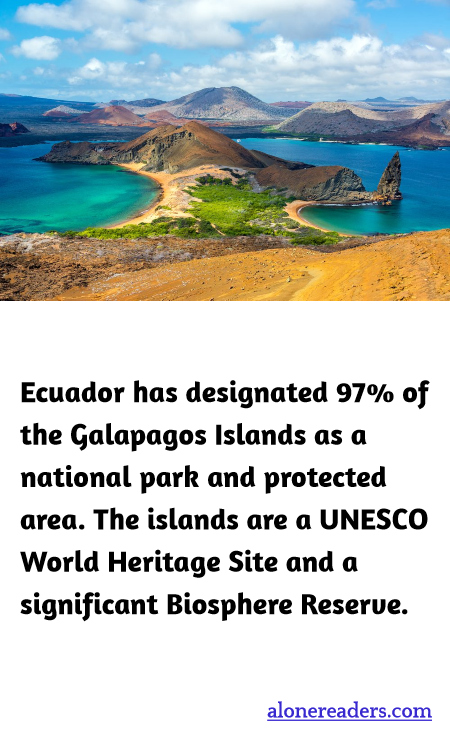
Ecuador has taken significant steps to protect the unique ecosystems of the Galapagos Islands by designating 97% of its territory as a national park and protected area. This initiative underscores the country’s commitment to preserving the rich biodiversity and natural heritage that the islands are renowned for worldwide. The Galapagos Islands, situated about 900 kilometers west of the Ecuadorian mainland, are a cluster of volcanic islands that are celebrated for their endemic species and the pivotal role they played in Charles Darwin’s formulation of his theory of evolution by natural selection.
The designation of such a large portion of the Galapagos as a protected area is crucial considering the unique flora and fauna found here, many of which are not seen anywhere else on earth. This includes species like the giant Galapagos tortoises, marine iguanas, and the flightless cormorant. The protection efforts help ensure that these species, along with the islands' diverse ecosystems, including rocky coastlines, pristine beaches, and lush highlands, continue to thrive and evolve naturally with minimal human interference.
Being a UNESCO World Heritage Site as well as a Biosphere Reserve further highlights the global importance of the Galapagos Islands as a key resource for scientific research, education, and conservation. The status helps garner support and attention from the global community, aiding in efforts to monitor environmental threats like climate change and invasive species, which pose significant risks to the islands' fragile ecosystems.
Moreover, Ecuador’s management of the Galapagos includes not just protecting its biodiversity but also regulating tourism, which is a major economic activity in the region. Controlled tourism ensures that visitors can witness the beauty and uniqueness of the islands without contributing to their degradation. This sustainable approach serves as a model of how tourism can be aligned with conservation goals.
In conclusion, Ecuador’s dedication to conserving the Galapagos Islands offers a beacon of hope for biodiversity preservation. By protecting such a vast area of the archipelago, Ecuador not only safeguards the biological treasures of the Galapagos but also upholds its responsibility to the global community, ensuring that future generations can continue to learn from and enjoy this extraordinary natural laboratory.
