The Galapagos Islands, a volcanic archipelago in the Pacific Ocean, are renowned for their vast number of native species, many of which are found nowhere else on Earth. Among the most emblematic and fascinating creatures of these islands are the Giant Tortoises and the Blue-Footed Boobies, each outstanding in their unique rights, contributing to the islands' mystique and global importance in biodiversity.
The Giant Tortoises of the Galapagos are impressive in their size and longevity, some weighing as much as 595 pounds and living for more than a century, with potential lifespans reaching up to 150 years or more. These gentle giants are emblematic of the slow pace and ecological uniqueness of the islands. Their significant lifespan and slow reproduction rates make their population vulnerable yet resilient, having survived drastic declines. Conservation efforts in recent decades have begun to restore their numbers, symbolizing hope for ecological recovery and sustainable coexistence.
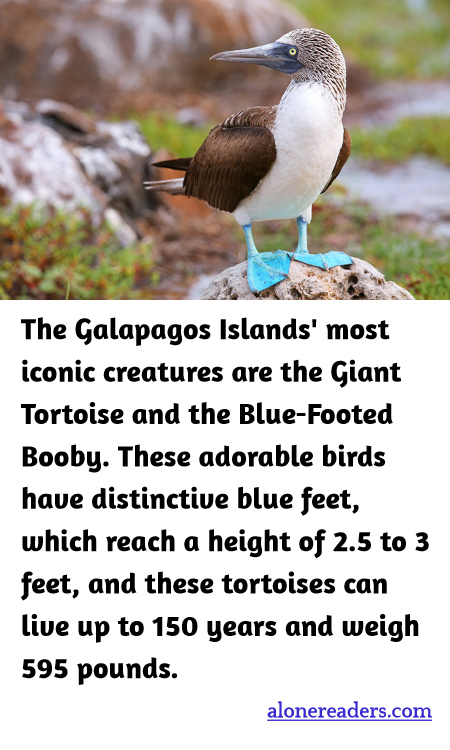
On the flip side, the Blue-Footed Boobies are perhaps one of the archipelago's quirkiest birds, easily recognizable by their bright blue feet, which are a result of their diet rich in carotenoid pigments. The blue feet play a significant role in the birds' mating rituals, where males display their feet in an elaborate dance to attract females. Standing 2.5 to 3 feet tall, these birds are not only a sight of visual delight but are also remarkable for their precise and almost theatrical plunge-diving skills to catch fish, drawing nature enthusiasts and ornithologists from around the world.
The co-existence of creatures like the Giant Tortoise and the Blue-Footed Booby on the Galapagos Islands offers invaluable insights into evolution and ecology. The islands serve as a natural laboratory for scientific research, and the unique traits and behaviors of these animals have played a critical role in shaping our understanding of natural selection. The ongoing conservation challenges and efforts also remind us of the continuous need to balance human interests with the imperatives of biodiversity and ecosystem health.
In essence, these captivating species not only add to the allure and mystery of the Galapagos Islands but also remind us of the wonders of the natural world and the importance of conservation efforts to sustain it. As we delve deeper into understanding these creatures, they undoubtedly continue to inspire awe and respect for the natural processes that mold the biodiversity of our planet.
