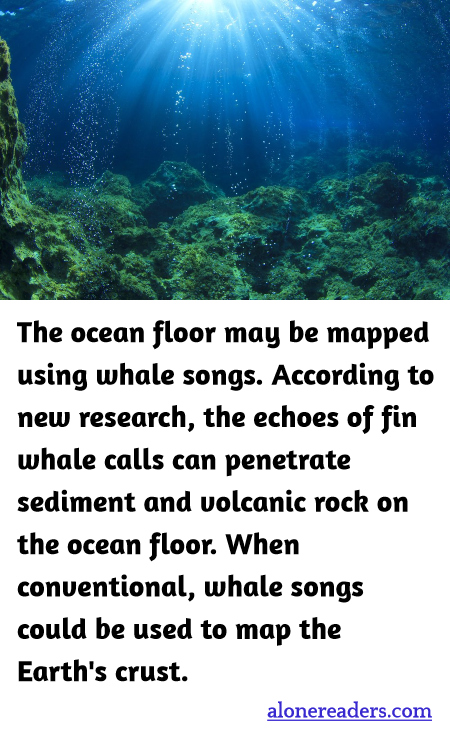
The exploration of the ocean depths has always been a challenge due to the immense expanses and inhospitable conditions. However, a groundbreaking approach utilizing the songs of fin whales offers a promising new method for understanding what lies beneath the ocean's surface. Researchers have discovered that the powerful, low-frequency calls emitted by fin whales can penetrate deep into the ocean's sediment and volcanic layers, effectively allowing these natural sounds to help map the structure of the Earth's crust.
Fin whales, among the earth's largest creatures, communicate using vocalizations that can reach up to 189 decibels and travel thousands of miles underwater. These low-frequency calls not only serve as a means of communication and navigation through the murky ocean waters but now, according to recent studies, they also have the potential to aid in scientific exploration. Scientists have observed that the echos from these calls, when they bounce off different layers of the ocean floor, carry back valuable data about the composition and topography of the seabed.
This method, akin to a natural form of seismic imaging, could supplement existing technologies, such as sonar and satellite-based mapping, which are often costly and time-consuming. The whale song approach could provide continuous, real-time data at a fraction of the cost, all while having minimal environmental impact since it makes use of sounds that are naturally produced by the whales.
Mapping the ocean floor is not just of academic interest; it has practical implications in enhancing our understanding of underwater fault lines and could help in predicting earthquakes and tsunamis. It also contributes valuable information for submarine navigation and lays the groundwork for conservation efforts by identifying key habitats and the environmental impacts of deep-sea mining and other human activities.
Although this innovative use of whale songs is still in the early stages of development, it represents an exciting intersection of biology and geology. The methodology underscores a broader move towards sustainable and environmentally friendly research techniques, emphasizing the importance of preserving our planet's natural resources. As this research advances, it could revolutionize our capabilities for ocean exploration and deepen our understanding of the complex dynamics of Earth's underwater landscape.
