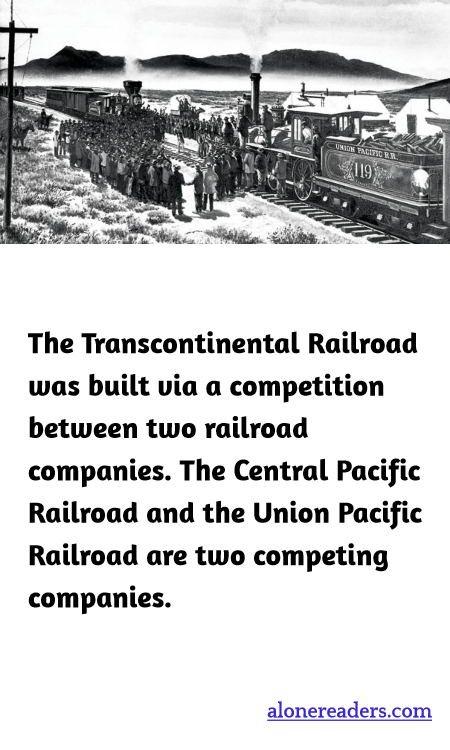
The creation of the Transcontinental Railroad was a monumental event in American history, symbolizing not just ingenuity and determination but also the culmination of an intense rivalry between two ambitious railroad companies: the Central Pacific Railroad and the Union Pacific Railroad. This competition was driven by the immense demand for faster and more reliable means of crossing the vast American West, which was critical not just for the mobility of people but also for the transport of goods.
The Central Pacific Railroad, starting its work in Sacramento, California, had the formidable task of pushing its tracks eastward through the challenging terrain of the Sierra Nevada mountains. Meanwhile, the Union Pacific Railroad began its journey from Omaha, Nebraska, and had to traverse the Great Plains and the Rocky Mountains. Both companies faced formidable natural obstacles, harsh weather conditions, and the daunting logistics of laying tracks over hundreds of miles of wild, uncharted territory.
The competition between the two was fueled by the government incentives offered by the Pacific Railroad Acts, which granted land and funds to the railroads based on each mile of track laid. As a result, both companies pushed their workers to the brink to extend their respective stretches of railroad. The labor force was a melting pot of nationalities and backgrounds, including war veterans, immigrants from Ireland, Germany, and China, and even Civil War veterans from both the Union and Confederate sides. These workers faced extreme conditions, with brutal winters, scorching summers, and the constant threat of attacks by Indigenous tribes.
On May 10, 1869, the two lines finally converged at Promontory Summit, Utah, marking the completion of the Transcontinental Railroad. This event was celebrated with the driving of the "Golden Spike," a ceremonial final spike made of gold, to connect the Central Pacific and Union Pacific rails. The completion of the railroad dramatically transformed America, making travel across the continent from the Atlantic to the Pacific possible in just days rather than months. It facilitated a new era of westward expansion, economic growth, and the rapid settlement and development of the American West.
The completion of the Transcontinental Railroad stands as a testament to human perseverance, technological progress, and the transformative power of infrastructure. It also marked the beginning of a new chapter in the American narrative, setting the stage for the United States to emerge as a major player on the global stage thanks to its newfound ability to efficiently transport resources and people across great distances.
