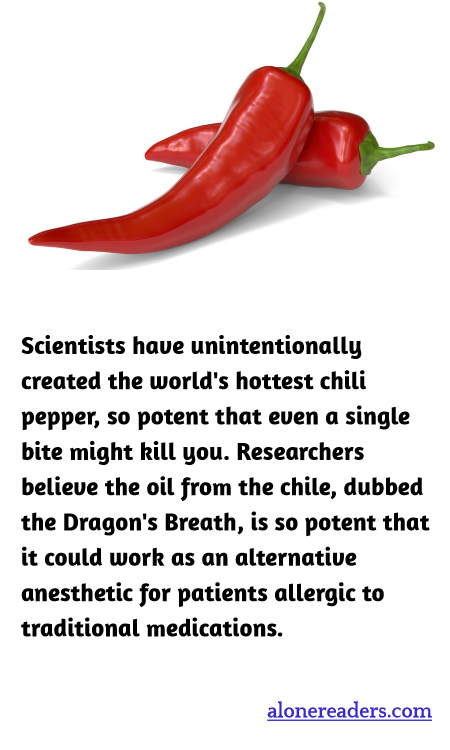
In a surprising twist of scientific inquiry, researchers have developed what is now considered the world's hottest chili pepper, known as the Dragon's Breath. This extraordinary chili, with its intense heat, reaches such a level of spiciness that consuming even a small bite could be lethal. The pepper's creation was not intentional; rather, it was a byproduct of efforts aimed at achieving other scientific outcomes.
The Dragon's Breath chili registers an astonishing 2.48 million on the Scoville Heat Scale, a standard measurement of the spiciness of chili peppers. This puts it well above other notoriously hot peppers like the Carolina Reaper and the Trinidad Scorpion. The unprecedented heat of the Dragon's Breath is due to its high concentration of capsaicin, the active component that triggers the sensation of heat in the human body.
Beyond its potency as a culinary challenge, the Dragon’s Breath has potential medical applications. Researchers are exploring its use as an anesthetic, especially for patients who are allergic to traditional anesthetics. The pepper’s oil could numb the skin, effectively making it a powerful local anesthetic. This could be particularly valuable in medical scenarios where conventional anesthesia options are unsuitable.
This discovery opens up discussions about the responsible development and use of such potent natural substances. While the culinary applications of the Dragon’s Breath are limited due to its extreme heat, its potential for medical use highlights the surprising and often unpredictable ways in which the quest for scientific discovery can evolve. The development of this chili pepper serves as a reminder of the power and mystery still held within the natural world, awaiting discovery and practical application by curious scientists.
