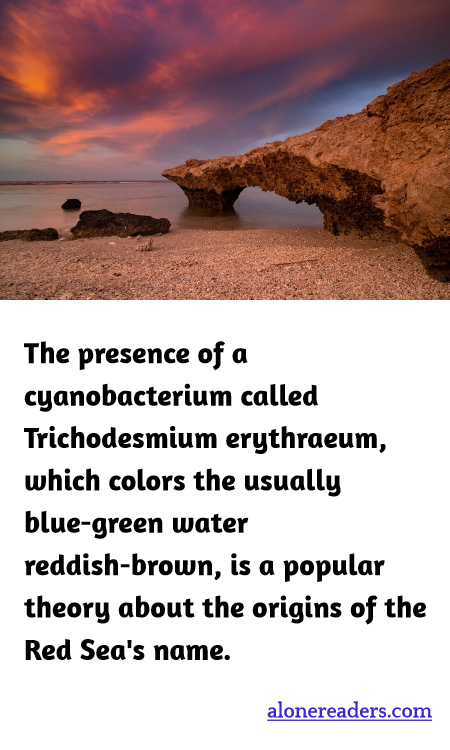
The intriguing name of the Red Sea has sparked curiosity and various theories throughout history. One prevalent theory links the name to the seasonal blooms of a type of cyanobacterium known as Trichodesmium erythraeum. These blooms can turn the normally stunning blue-green waters into a distinctive reddish-brown hue, thus possibly explaining the origin of the "Red" in Red Sea.
Trichodesmium erythraeum is not just any ordinary marine organism. It is recognized for its unique ability to fix atmospheric nitrogen into a form that can be used by other living beings, playing a crucial role in the marine ecosystem. Normally invisible to the naked eye, under certain conditions, these cyanobacteria multiply rapidly and form dense, visible blooms. These blooms can have a significant impact on the color of the water due to the presence of pigments in the cyanobacteria that respond to light differently compared to the surrounding waters.
The transformation of the sea's color due to Trichodesmium is not permanent; it is a sporadic occurrence that depends on various environmental factors such as temperature, light, and nutrient availability in the water. Some scholars and scientists suggest that ancient mariners who sailed the Red Sea could have witnessed such a bloom, leading them to name the body of water accordingly.
Other theories also exist regarding the origin of the sea's name, involving historical, geological, or biblical explanations. For instance, some associate the name with the red-tinged mountains nearby or the seasonal direction of the wind, while others connect it to historical descriptors used in ancient languages where "red" could also mean "south."
While the definitive origin of the Red Sea’s name may remain a topic of debate among historians and scientists, the explanation involving Trichodesmium erythraeum provides a compelling naturalistic account. It highlights the complexity and beauty of marine life and reminds us of the ecological phenomena that could even influence the course of human history and geographical nomenclature. Such fascinating interactions between nature and human interpretation continue to fuel our curiosity and deepen our understanding of the world.
