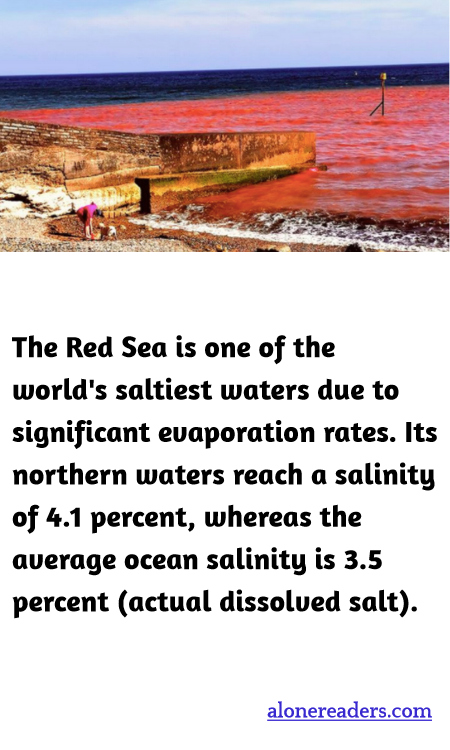
The Red Sea, a narrow and lengthy body of water nestled between Africa and Asia, is renowned for its vibrant coral reefs and diverse marine life. One of its distinguishing features is its unusually high salinity levels, which far exceed those found in much of the world's oceans. At about 4.1 percent salinity in its northern parts, the Red Sea is significantly saltier than the global ocean average of 3.5 percent. This elevated salinity is primarily due to the region's high evaporation rates, which are fueled by the hot and arid climate that characterizes the surrounding land.
The combination of the sea's geographical location and climatic conditions contributes to the high rate of evaporation. Surrounded by deserts, the Red Sea is subject to intense solar radiation and minimal precipitation, factors that increase water evaporation. As the water evaporates, salts and other minerals are left behind, increasing the salinity of the remaining water.
This elevated salinity has profound implications for the marine ecosystem in the Red Sea. High salinity can limit the types of marine life that are able to thrive; however, the organisms found in the Red Sea have adapted to these conditions. For instance, the coral reefs in the Red Sea are among the most heat resistant in the world. The unique species of corals have adapted to not only survive but thrive in warmer and saltier waters than their counterparts in less extreme environments.
The Red Sea's high salinity also impacts its buoyancy, making it easier to float and swim in its waters, a trait that is particularly enjoyed by tourists and swimmers. Moreover, the region's water conditions, including its clarity and biodiversity, make it a popular destination for diving and snorkeling.
Understanding and monitoring the salinity levels of the Red Sea is crucial for predicting future changes in its ecosystem, especially in the face of global climate change. The resilience of Red Sea corals offers valuable insights into coral biology and potential ways to mitigate the effects of global warming on coral reefs worldwide.
In summary, the Red Sea's high salinity is a result of its extreme evaporation rates and contributes to its unique ecological characteristics. The hardy marine species of this body of water offer a fascinating glimpse into life’s adaptability under harsh conditions, underscoring the dynamic interplay between geography, climate, and biology in one of the world's most intriguing marine environments.
