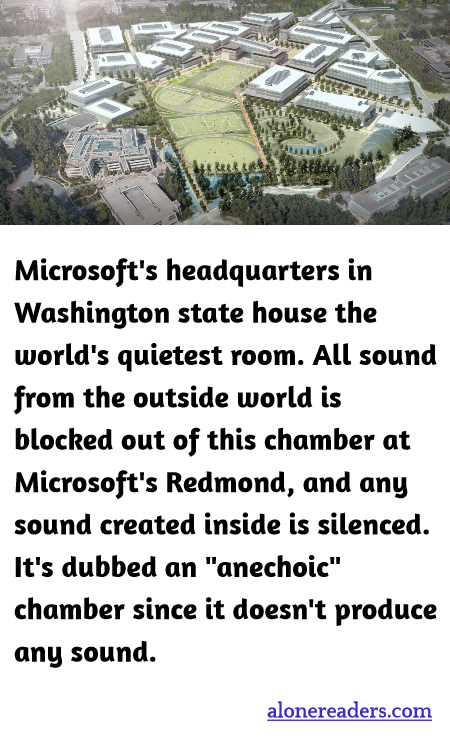
In the bustling environment of Microsoft's headquarters in Redmond, Washington, there exists a remarkable engineering feat known as the world's quietest room. This anechoic chamber, a meticulously designed space, aims to achieve near-perfect silence by completely blocking out external sounds and absorbing echoes within. The term "anechoic" literally means "no echo," which describes its key function perfectly.
The room's walls, ceiling, and floor are lined with thick, wedge-shaped foam absorbers that soak up sound waves, preventing them from reflecting back into the room. These absorbers are so effective that even the sounds made by visitors vanish almost as soon as they are produced. The chamber holds a record for its extraordinarily low noise level, which is measured in negative decibels—the threshold below which human ears cannot perceive any sound.
The purpose of such a quiet environment extends beyond just creating a silence haven. Microsoft uses this chamber to conduct sensitive audio testing and research, vital for improving the sound quality of their products, from voice recognition software and headphones to microphones and speakers. Scientists and engineers also use the chamber to better understand how different materials and technologies react to absolute silence, an environment that is almost impossible to find in the outside world.
Visitors to the anechoic chamber often describe the experience as surreal, where the absence of noise can disorient the senses and even amplify the sounds of one's own body, like the heartbeat or breathing. This can be an unsettling and even overwhelming experience for some, illustrating just how significant the presence of any sound is to human perception.
With its unique characteristics, Microsoft's anechoic chamber not only serves as a critical tool in technological advancement but also sheds light on the profound impact of silence in the noisy digital age we live in. Its existence emphasizes the importance of sound in our lives, not only in the way we communicate but also in how we experience and perceive the world around us.
