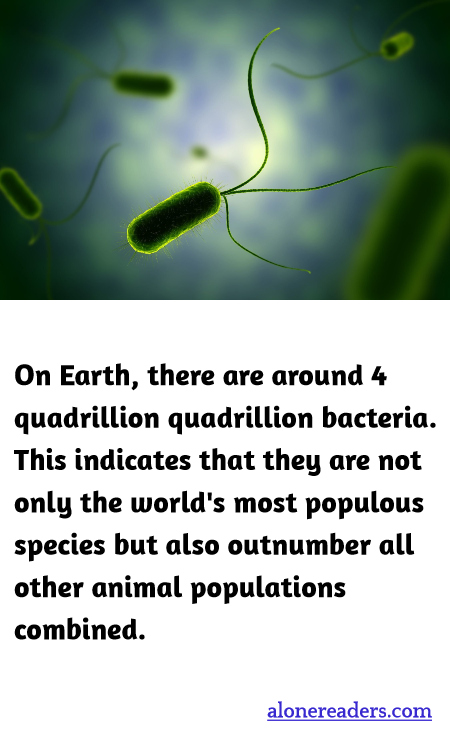
Bacteria are astoundingly abundant, with estimates suggesting a mind-boggling 4 quadrillion quadrillion (which is 10^30) individual bacteria inhabiting the Earth. This incredible number far surpasses the total count of all the other animal species combined, highlighting bacteria as not just predominant but supremely dominant in number.
These microorganisms are found in virtually every environment on Earth, from the deepest parts of the oceans to the highest peaks, from the freezing arctic to boiling hot springs, and from the inside of organisms' bodies, including humans, to the outer reaches of Earth's atmosphere. Their ubiquity allows them to play fundamental roles in the ecosystem, primarily in the recycling of nutrients. Bacteria break down organic matter, derive energy through the decomposition process, and ensure that essential elements like carbon and nitrogen are cycled back into the ecosystem, supporting life of all forms.
Moreover, bacteria's influence extends well beyond environmental functions. In humans, a rich array of bacterial colonies constitutes the microbiome, which is integral to many body functions including digestion, protection against infections, and even the regulation of the immune system. The balance and health of this microbiome are critical; disruptions can be linked to a wide variety of conditions, ranging from inflammatory bowel disease to obesity, and even mental health issues.
In recent years, studies have expanded into how bacteria evolve and how their vast numbers can be utilized in technology and medicine. For example, the use of genetically modified bacteria to clean up oil spills or to produce biofuels represent promising areas of applied research, harboring potential solutions to some of the modern world's most pressing challenges, such as energy sustainability and environmental degradation.
Despite their microscopic size, the sheer abundance of bacteria and their broad range of habitats and functions make them a cornerstone of life on Earth. Their roles in ecological systems, human health, and technology affirm that while they are invisibly small, their impact is planet-wide and profound.
