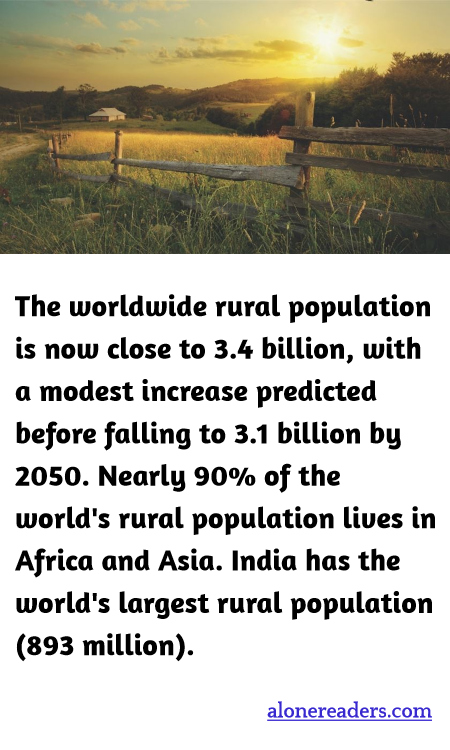
As of recent estimates, the global rural population stands at approximately 3.4 billion people, highlighting a significant portion of the world's demographic that resides outside bustling city centers and urban developments. This number is expected to experience a slight rise in the near term; however, projections suggest a decline to around 3.1 billion by the year 2050. This anticipated decrease is primarily due to the ongoing urbanization trends where more people are moving towards cities in search of better employment, education, and healthcare opportunities.
The distribution of the rural population is notably concentrated in Africa and Asia, continents that together account for nearly 90% of the global rural demographic. This high percentage reflects the agricultural base of the economies in these regions, alongside less-developed rural to urban infrastructure and services which contribute to slower rates of urban migration compared to continents like Europe and North America.
India, in particular, stands out with the world's largest rural population at 893 million people. This figure underscores the agrarian backbone of the nation, despite rapid industrialization and urbanization in several regions. The rural communities in India and similar countries often suffer from a lack of basic services such as clean water, healthcare, and education, which are more readily available in urban areas. Furthermore, these communities are often more vulnerable to the impacts of climate change and environmental degradation, which can threaten their livelihoods and force migration to urban centers.
This trend of rural population decline has far-reaching implications for global agriculture, food security, and rural economies. As rural populations age and young, able-bodied individuals move to cities, agricultural labor forces shrink, which can affect crop production and prices. Additionally, the cultural traditions and knowledge rooted in rural areas are at risk as younger generations relocate and adapt to urban lifestyles.
Efforts to sustain and invigorate rural areas are critical and require targeted policies such as improving rural infrastructure, providing better access to education and healthcare, and enhancing agricultural technology and productivity. These measures not only support the livelihoods of those within rural communities but also contribute significantly to the broader goals of sustainable development and poverty reduction. As we move towards 2050, understanding the dynamics of rural demographics and implementing robust policies will be key to balancing urbanization with rural development and ensuring equitable growth across different regions of the world.
