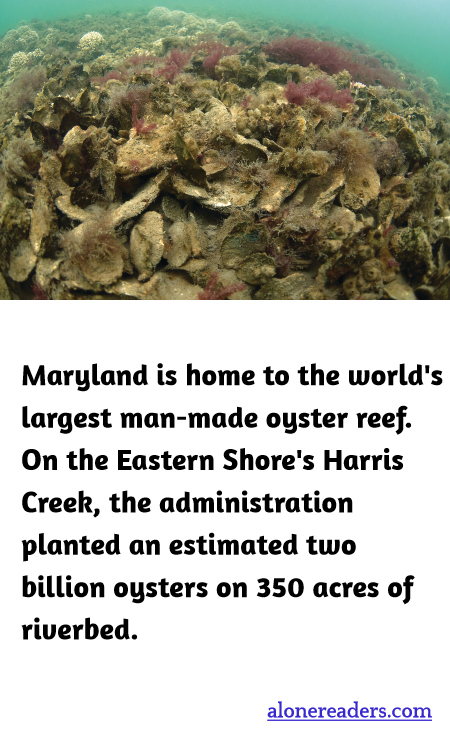
In the serene waters of Harris Creek on Maryland's Eastern Shore lies a monumental testament to environmental rejuvenation and sustainability: the world’s largest man-made oyster reef. Spanning an impressive 350 acres, this expansive reef is not merely a feature of aquatic architecture but a critical player in the ecological and economic vitality of the region. With two billion oysters planted, the project represents a significant effort towards restoring oyster populations that have dwindled dramatically over the past centuries.
Oysters are more than just a seafood delicacy. They play a pivotal role in their ecosystems, acting as natural water purifiers. A single oyster can filter up to 50 gallons of water per day, thus improving water quality and clarity, and in turn, encouraging the growth of underwater grasses and increasing the diversity of life in aquatic habitats. This filtration process also helps to remove excess nutrients from the water, combatting the harmful effects of nitrogen pollution which can lead to destructive algae blooms.
The ecological benefits of the Harris Creek oyster reef extend beyond water purification. The reef provides a structured habitat for a multitude of marine species. Young fish, crabs, and other shellfish find sanctuary among the crevices of oyster shells, which serve as nurseries and feeding grounds for a vibrant aquatic community. The reef thus contributes to the biodiversity of the Chesapeake Bay, bolstering both commercial fisheries and the recreational fishing industry.
Furthermore, the success of the Harris Creek reef has significant implications for coastal protection strategies. Oyster reefs are known for their ability to mitigate shore erosion by stabilizing sediment and breaking waves before they reach the shore, thereby protecting estuarine and coastal ecosystems.
Economically, the Harris Creek oyster reef supports a thriving seafood industry, which is a cornerstone of the Eastern Shore’s economy. It helps sustain the traditional way of life of many local communities, providing employment and maintaining cultural heritage.
The creation and ongoing expansion of the world's largest man-made oyster reef in Maryland result from collaborative efforts involving government agencies, environmental organizations, and local communities. It stands as a beacon of successful environmental stewardship and a hopeful symbol for similar restoration efforts globally. As this reef continues to mature, its benefits will expand, providing a model of how targeted, thoughtful conservation initiatives can rejuvenate even the most strained environmental systems.
