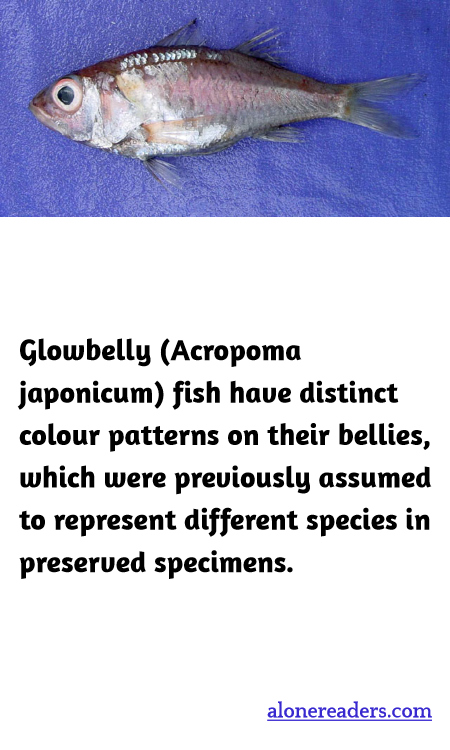
The Glowbelly fish, scientifically named Acropoma japonicum, presents a fascinating example of how visual characteristics can lead to misinterpretations in species classification. This marine species, predominately found in the waters of Japan and other parts of Asia, is notable for the intense luminous organ situated along its underside. Initially, variations in the color patterns displayed on their bellies led scientists to believe that there were multiple species of this fish, especially when examining preserved specimens where the luminescent quality may diminish or alter in appearance.
Upon closer examination and with advanced taxonomic techniques, researchers were able to determine that these variations were not enough to classify them as different species. The glow that gives the Glowbelly its name is derived from bioluminescent bacteria housed in a specialized organ. This light-producing feature is thought to play a crucial role in predatory tactics and communication among individuals, particularly in the dark depths of the sea where they reside.
Detailed study over time has shown that the variance in belly colors largely results from dietary differences, age, or the specific habitat conditions rather than genetic disparity. This reflects a broader lesson in marine biology and taxonomy: environmental factors can often lead to physical changes that might suggest speciation where there is none. It's a testimony to the complexity of marine life and the caution required in hastily defining new species based on morphological differences alone.
Furthermore, understanding the true nature and classification of species such as the Glowbelly has significant implications for conservation efforts. Misidentification can lead to skewed population estimates and misguided protection policies. As marine ecosystems face increasing threats, accurate species identification ensures that conservation resources are correctly allocated and that biological research can continue to uncover the mysteries of marine life.
In sum, the story of the Glowbelly fish not only exemplifies the challenges of marine species classification but also highlights the intricate interplay between an organism's biology and its environment. As technological advances continue to improve research methodologies, it is likely that many more such revelations will emerge, refining our understanding of the biodiversity that inhabits Earth's oceans.
