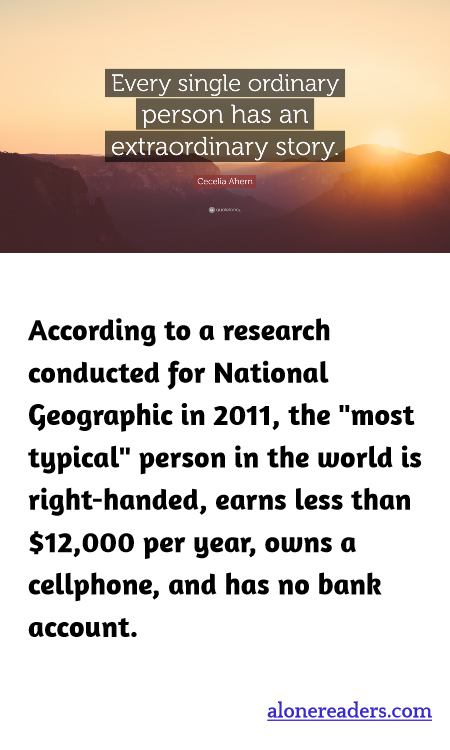
In a world brimming with diversity, pinpointing the "most typical" person might seem to be an exercise in futility. However, the intriguing research conducted for National Geographic in 2011 did exactly that, creating a composite portrait of the average global citizen based on various demographic, socioeconomic, and lifestyle metrics. This eye-opening research unveils that the most typical individual on Earth is right-handed, reflecting the biological prevalence of right-handedness found in approximately 90% of the global population.
Economically, this individual earns less than $12,000 annually, a figure that underscores the vast income disparities existing across different regions while highlighting the reality of living standards in many developing countries. This nominal income sheds light on the struggle for a majority of the world's population, where financial survival often hinges on minimal earnings and affects all aspects of life from education to health care.
Remarkably, despite this modest income, the typical person is likely to own a cellphone. This technological penetration illustrates the widespread adoption of mobile technology even in less affluent communities, offering a lifeline, a means of education, and a gateway to financial services for those without traditional banking access. Indeed, the finding that the most typical individual lacks a bank account underscores a significant barrier to financial inclusion, complicating everything from receiving payments to saving money securely.
This profile not only reflects the characteristics of an average global citizen but also highlights the broad variances that millions of individuals navigate daily. It catalyzes a deeper understanding of how different life can be across various contexts, shaping perspectives on development, technology, and economic policies. Moreover, the portrait encourages dialogues on how to address these disparities and foster an environment where more individuals can improve their living conditions and access the benefits of modern innovations like mobile banking, healthcare, and online education.
Thus, while the research highlights commonality, it also throws stark inequalities into sharp relief, offering an invaluable snapshot of our complex, interconnected world. As globalization progresses, it becomes increasingly crucial to consider these aspects of human existence, ensuring policies and developments are inclusive and considerate of the 'typical' lives that many lead. Understanding and acting upon these insights can guide efforts that endeavor to make life less typical and more prosperous for everyone.
