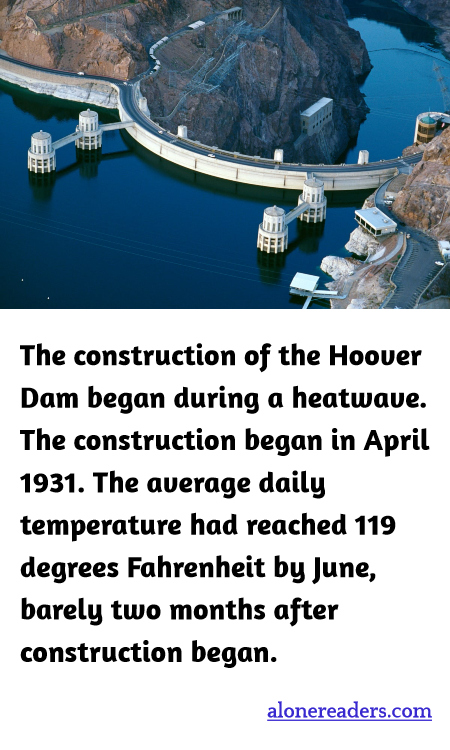
In April 1931, as the United States grappled with the economic strains of the Great Depression, a monumental project began in the arid deserts of Nevada and Arizona: the construction of the Hoover Dam. Not only was this project a massive feat of engineering, it was also a test of human endurance against the harsh forces of nature. Beginning in the spring, the dam's construction soon met the brutal reality of summer heatwaves, with June temperatures soaring to an average daily high of 119 degrees Fahrenheit.
Despite these sweltering conditions, thousands of workers pressed on. The project, originally called the Boulder Dam, was conceived as a means to provide hydroelectric power, control floods, and supply water for irrigation and municipal use. Workers from all over the country, many desperate for employment due to the Depression, converged on the Colorado River to partake in this ambitious endeavor.
Laboring in such extreme heat was perilous, and the construction site quickly became a landscape of both technological innovation and human struggle. Workers were frequently subjected to heatstroke and severe dehydration; however, the promise of regular wages kept them at their tasks. Innovations in construction techniques were prompted by the need not only to address engineering challenges but also to adapt to the punishing desert conditions. Cooling systems, timed work shifts during the cooler hours, and the provision of electrolyte-rich drinks helped reduce the risk of heat-related illnesses.
The Hoover Dam stands today not only as a testament to human ingenuity and resilience but also as a reminder of the harsh conditions under which it was built. The project was completed in 1936, two years ahead of schedule, symbolizing hope and human achievement during a time of national despair. It serves as a stark example of what can be accomplished when necessity meets determination, even in the face of almost unbearable environmental challenges.
