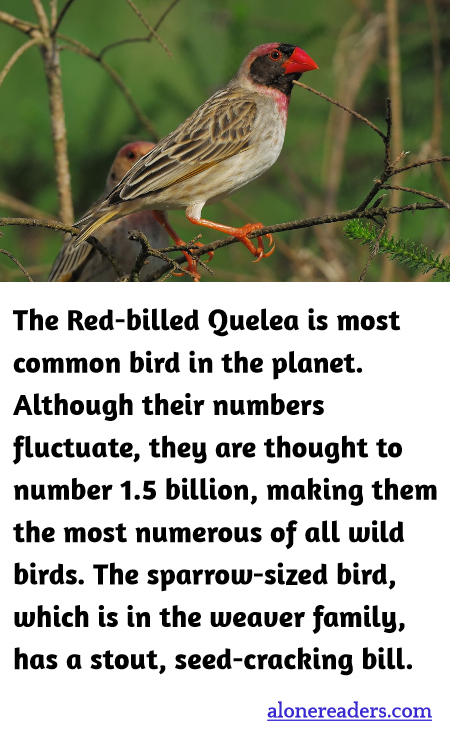
The Red-billed Quelea, often described as the world's most numerous wild bird, plays a fascinating and complex role in our ecosystem. With an estimated population of around 1.5 billion, these birds are a striking example of nature's ability to flourish under the right conditions. Part of the weaver family, they are small, sparrow-sized birds, identifiable by their stout, seed-cracking bills which they use to feed primarily on grass seeds, making them pivotal in controlling the spread of various grass species.
Found across sub-Saharan Africa, the Red-billed Quelea thrives in savannah, grassland, and open woodland areas. Their preference for grass seeds aligns with their natural habitat, often leading to them being found in large flocks that can sometimes comprise thousands of birds. These large congregations are not only a spectacular sight but also reflect the birds' complex social structures, which play a critical role in their survival and reproduction.
During the breeding season, which is closely linked to the rainy season and the availability of food, Red-billed Queleas exhibit a remarkable explosion in population. They build intricately woven nests, and colonies can be incredibly dense, occasionally leading to significant agricultural damage. This aspect of their behavior has dubbed them as pests in certain regions, where their feeding can decimate crops.
Despite their pest status in some areas, Red-billed Queleas are an important part of the African savannah ecosystem. They serve as a food source for a variety of predators, including birds of prey and snakes. Their ability to adapt and survive in diverse conditions speaks to their resilience and the intricate balance of ecosystems where they are active participants.
Their massive numbers and the resulting impact on both their natural habitat and agricultural areas highlight a crucial aspect of wildlife management and the challenges of human-wildlife coexistence. While they are a testament to the success of a species' ability to adapt and thrive, they also underscore the importance of effective management strategies to mitigate negative impacts on agriculture while conserving their populations and the ecological roles they play.
Understanding and studying the Red-billed Quelea provide valuable insights into population dynamics, habitat conservation, and the complex interactions between species and their environments. As such, they are not just a species of bird but a key player in the biodiversity of the regions they inhabit, representing both a challenge and an opportunity for conservationists and agricultural communities alike.
