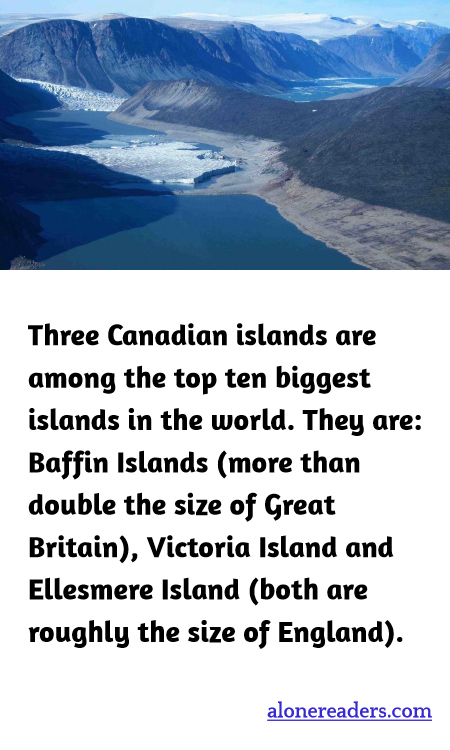
Canada is renowned for its vast landscapes and breathtaking natural sceneries, and among these are some of the world's largest islands, three of which rank among the top ten globally. Baffin Island, Victoria Island, and Ellesmere Island each offer unique ecosystems and captivating histories, underscoring Canada's rich geographical diversity.
Baffin Island, the fifth largest island in the world, is a remarkable expanse covering approximately 507,451 square kilometers, more than double the size of Great Britain. Located in the Arctic Archipelago of Nunavut, this island is characterized by its dramatic fjords, towering mountains, and expansive ice fields, making it a hub for adventurous travelers seeking the arctic experience. Baffin Island is not only a geographical marvel but also a culturally rich region with a predominantly Inuit population, offering insight into the traditional lifestyles that have adapted to the Arctic environment.
Moving westwards, Victoria Island claims the title of the eighth largest island globally, covering about 217,291 square kilometers—roughly the size of England. It straddles the boundary between Nunavut and the Northwest Territories and is known for its complex network of lakes and rivers. Unlike many other massive islands, Victoria Island’s topography features tundra landscapes and a relatively flat terrain, which supports a variety of wildlife adapted to the Arctic and sub-Arctic climate. The island’s sparse human population is primarily involved in traditional industries, including fishing and hunting, preserving an intimate connection with nature.
Lastly, Ellesmere Island, standing as the world’s tenth largest island, mirrors the size of Victoria Island. It is the northernmost inhabited island of Canada, mostly covered in glaciers and ice fields, and features some of the most extreme weather conditions in the Arctic. The island’s environment is particularly harsh, with temperatures that can plummet deeply during the long winters, challenging even the hardiest of its wildlife. Ellesmere Island is also significant for its scientific communities who study its unique geology and ecosystems, contributing valuable information about climate change and environmental preservation.
These three islands not only exemplify the physical vastness and ecological diversity of Canada but also highlight the nation’s commitment to preserving these natural landscapes. Each island's unique climate, geography, and biological diversity make them critical areas for research and understanding global environmental changes, offering valuable lessons on resilience and adaptation. Whether one is drawn by the thrill of adventure, the beauty of untamed nature, or the pursuit of scientific knowledge, Baffin Island, Victoria Island, and Ellesmere Island stand as majestic reminders of the wild, expansive character of Canada's geography.
