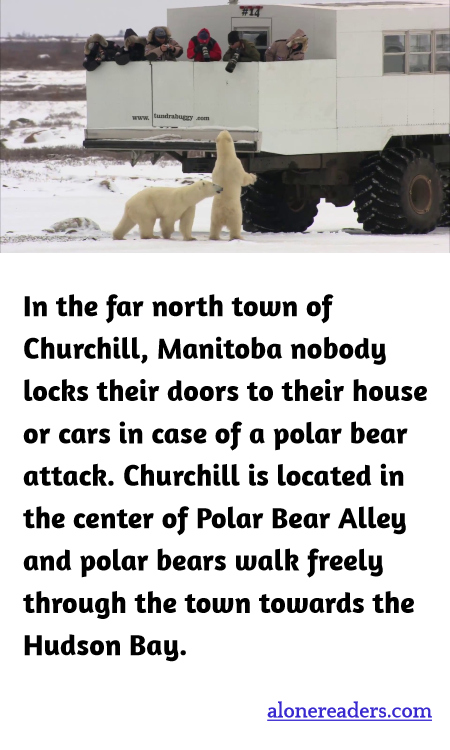
In the remote town of Churchill, Manitoba, a unique practice among the locals illustrates their adaptation to an extraordinary neighbor: the polar bear. Situated in the heart of Polar Bear Alley, where these majestic animals migrate annually, Churchill has adapted in unique ways to coexist with them. Here, the residents make it a point to leave their doors unlocked, a safety measure rather than a sign of small-town trust. The reason behind this uncommon practice is both practical and lifesaving, as it provides a quick refuge for anyone who might encounter a polar bear in the streets.
Churchill’s proximity to the Hudson Bay makes it a prime spot for polar bears to pass through as they move towards the ice where they hunt seals. This geographical coincidence poses significant challenges and dangers; polar bear encounters in this small town are not uncommon during the migration period. The unlocked doors of both homes and vehicles offer a potential escape route for residents and visitors alike caught unaware by a wandering bear.
The town has also instituted other measures to manage the coexistence safely and responsibly. A Polar Bear Alert Program, for instance, allows people to report sightings, and a team is dedicated to managing bears that wander too closely to human populated areas. Techniques include using noise to encourage bears to move away, or in some cases, capturing and holding them in a "bear jail" until they can be safely relocated.
Through education, community preparedness, and adaptation, Churchill has become a model of human-animal coexistence. The scenario also draws tourists, eager to see polar bears in their natural habitat, but education on safety and respect for wildlife remains a top priority to ensure both human and bear safety. This unique interaction between humans and polar bears in Churchill reflects both the challenges and the wonderful possibilities when nature and human settlements converge.
