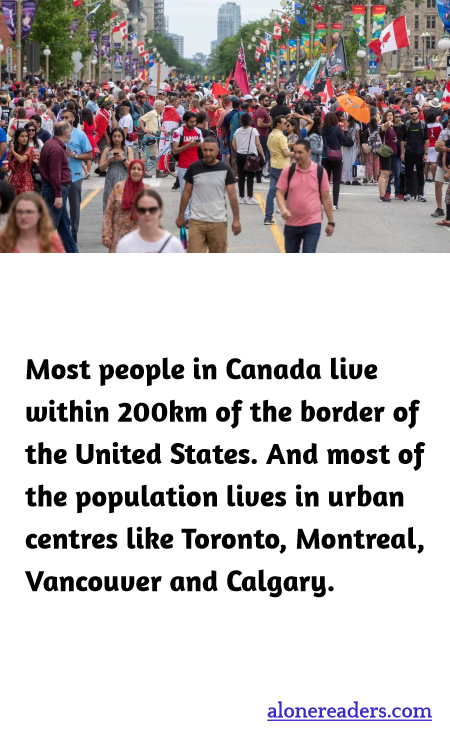
The geographic and urban configuration of Canada is highly unique among global nations, primarily characterized by its vast, expansive landscapes and highly concentrated urban centers. A striking feature of Canada's demographic distribution is that most Canadians live surprisingly close to the United States border. In fact, it's estimated that about 90% of the population resides within 200 kilometers of this border. This proximity to the U.S. not only facilitates economic and social interactions but also reflects historical and geographical factors that have shaped settlement patterns in Canada.
The reasons for this demographic phenomenon are manifold. Historically, areas close to the U.S. border offered more temperate climates, fertile lands, and better access to trade routes and economic opportunities. Additionally, the proximity to the U.S. has allowed for easier access to American markets and services, which has been crucial for economic and cultural exchange.
Moreover, the majority of Canadians live in urban centers, which include cities like Toronto, Montreal, Vancouver, and Calgary. These cities are not just economic powerhouses but also cultural and educational hubs. Toronto, the largest city in Canada, is a vibrant metropolis known for its diversity, financial services, and burgeoning technology sector. Montreal stands out for its bilingual fabric and cultural vitality, which stems from its deep-rooted French heritage. Vancouver, with its picturesque landscapes and a strong Asian influence, is a major center for the film and television industry and is notable for its environmental activism. Calgary, known for its oil and energy sector, also hosts the famous Calgary Stampede, attracting thousands of visitors annually.
The concentration of populations in these urban centers is influenced by their ability to provide a wide array of services, job opportunities, educational institutions, and lifestyle amenities that smaller towns and rural areas cannot match. Urbanization in Canada reflects a global trend where people flock to cities in search of better economic opportunities and a more diverse social life.
This urban trend does come with challenges, including housing affordability, transportation congestion, and environmental concerns. However, it also promotes greater economic development, cultural exchange, and innovations in various sectors.
In summary, the settlement pattern in Canada, with most people living near the U.S. border and in major urban centers, is a result of historical, economic, and geographic factors. This pattern highlights the balance Canadians strike between harnessing the opportunities presented by proximity to the U.S. and maximizing the benefits of urban living while managing the accompanying challenges.
