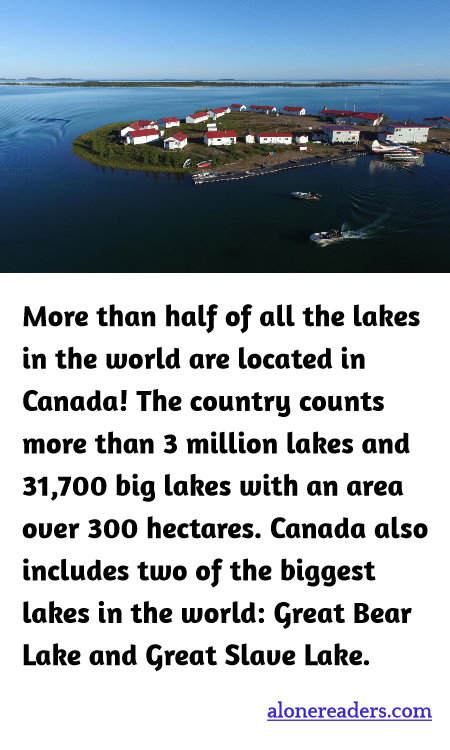
Canada, often celebrated for its vast and picturesque landscapes, is also renowned for its incredible abundance of lakes. In fact, it holds the distinction of having more than half of all the lakes in the world. Among its more than 3 million lakes, Canada hosts over 31,700 large lakes that each cover an area exceeding 300 hectares. This remarkable number not only highlights the country's rich geographical diversity but also its significant ecological wealth.
Among these countless bodies of water, two stand out due to their sheer size: Great Bear Lake and Great Slave Lake. Great Bear Lake, located in the Northwest Territories, is the largest entirely within Canada and the fourth largest in North America. During winter, its surface is completely frozen, transforming the lake into a vast, icy expanse. In contrast, Great Slave Lake, also situated in the Northwest Territories, is the deepest lake in North America and the second-largest in the Canadian territory. Its depths reach an impressive 614 meters, creating a unique aquatic environment.
These lakes are not just significant in terms of size but also play crucial roles in Canada's biodiversity and environmental sustainability. They support various ecosystems, providing habitat for countless species of wildlife and aquatic life. Moreover, the lakes are essential to the local communities that rely on them for transportation, recreation, and livelihoods, particularly through fishing and tourism.
The abundance and size of Canada's lakes also contribute significantly to its climate and hydrology. As major freshwater sources, they impact weather patterns and are integral to the water cycles within their respective regions. The presence of such large water bodies moderates the local climates, which can be particularly important in areas prone to extreme weather conditions.
In conclusion, Canada’s vast array of lakes, highlighted by the monumental Great Bear Lake and Great Slave Lake, is more than just a geographical feature. It is a crucial component of the nation’s natural heritage and environmental sustainability. These lakes enhance the quality of life for its residents, play a pivotal role in maintaining ecological balance, and boost economic activities through tourism and natural resources. Canada’s stewardship of these natural treasures continues to be vital in the face of changing global climates and environmental concerns.
