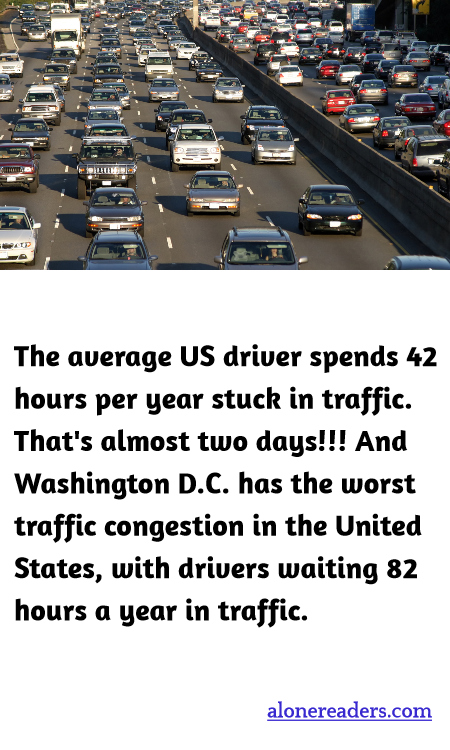
The annual plight of American drivers finds them spending an average of 42 hours each year mired in traffic jams—an inefficiency that adds up to nearly two full days of sitting idle on congested roads. This daunting statistic, highlighting a widespread urban challenge, underscores the significant time lost that could otherwise be utilized more productively or leisurely. Even more striking is the situation in Washington D.C., which bears the dubious distinction of having the worst traffic congestion in the entire United States. Drivers in the nation’s capital face an exasperating 82 hours per year stuck in traffic, nearly doubling the national average.
The reasons behind such severe traffic congestion in urban areas like Washington D.C. are multifaceted, including factors like continuous population growth, urban sprawl, and limitations in public transit infrastructure. These elements collectively contribute to an increasing number of vehicles on the road, which infrastructure improvements often struggle to keep pace with. The resulting traffic congestion not only wastes time but also contributes significantly to pollution and economic losses, affecting everything from individual stress levels to broader environmental impacts.
To combat these issues, city planners and policymakers are becoming increasingly focused on developing more effective traffic management solutions and enhancing public transportation systems. Implementing smart traffic lights, optimizing public transit routes and schedules, and encouraging carpooling and telecommuting are among the measures being adopted to alleviate the burden of traffic congestion. Additionally, the rise of telework flexibility due to advancements in technology and changes in workplace culture, accelerated by the COVID-19 pandemic, has also presented potential long-term decreases in traffic congestion.
Moreover, there is a push towards sustainable urban mobility plans that include expanding cycling lanes and pedestrian pathways to encourage non-motorized forms of transport. The future of urban transportation also seems to be tilting towards the adoption of electric vehicles and the integration of autonomous vehicle technology, which could further revolutionize how traffic is managed and potentially reduce congestion dramatically.
Such changes require not only considerable investment but also a cultural shift in how people choose to commute. Reducing the hours spent in traffic is not only about improving road layouts or increasing the capacity of public transport; it is equally about altering commuting habits and making collective choices that benefit everyone. As cities like Washington D.C. look to the future, the hope is that with the right mix of technology, policy, and public cooperation, the trend of rising traffic congestion can be reversed, ultimately leading to more efficient, greener, and less stressful commutes.
