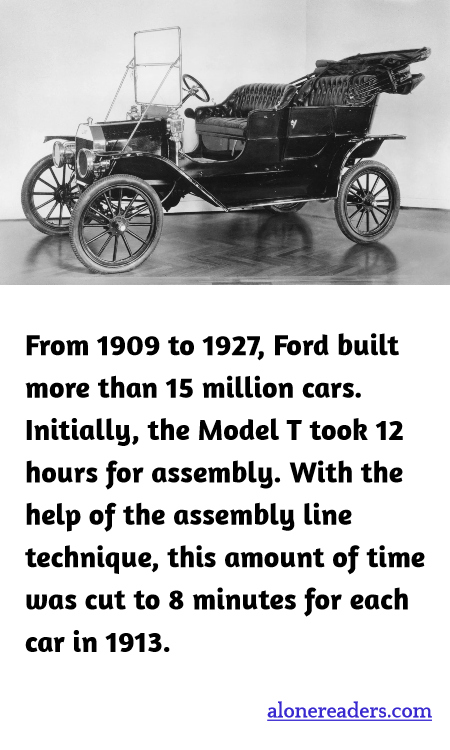
In the early 20th century, the automobile industry was revolutionized by Henry Ford and his Model T, a vehicle that significantly influenced the way cars were manufactured and sold. From 1909 to 1927, Ford produced over 15 million units of the Model T, marking it as one of the most popular cars of the time. The Model T initially required a laborious 12 hours to assemble. However, Ford's innovative introduction of the assembly line in 1913 dramatically transformed production processes.
The assembly line method was a groundbreaking development in manufacturing, born out of the need to expedite production and reduce costs. Before its implementation, workers would assemble the entire car at one stationary station. Ford conceptualized a system where the vehicle would move through a series of stations, with each worker responsible for adding specific parts. This method not only sped up the manufacturing process but also specialized the workforce, requiring less training per task and allowing for more precise and efficient work.
By streamlining production with the assembly line, Ford managed to reduce the assembly time of a single Model T from 12 hours to a mere 24 seconds by specific processes, eventually averaging a complete car every 24 seconds in later stages. This significant reduction in production time allowed Ford to dramatically lower the cost of the Model T, making it affordable for the average American, which in turn democratized automobile ownership and mobilized a nation. It exemplified Ford's philosophy of providing economical transportation on a scale large enough to cater to the mass market.
This pioneering approach not only solidified Ford's success but also established standards and practices that influenced manufacturing worldwide. Ford's use of the assembly line highlighted efficiency and affordability, two tenets that would shape industrial manufacturing for generations. In essence, the success of the Model T and its innovative assembly process marked a pivotal moment in industrial history, setting the stage for the modern era of mass production.
