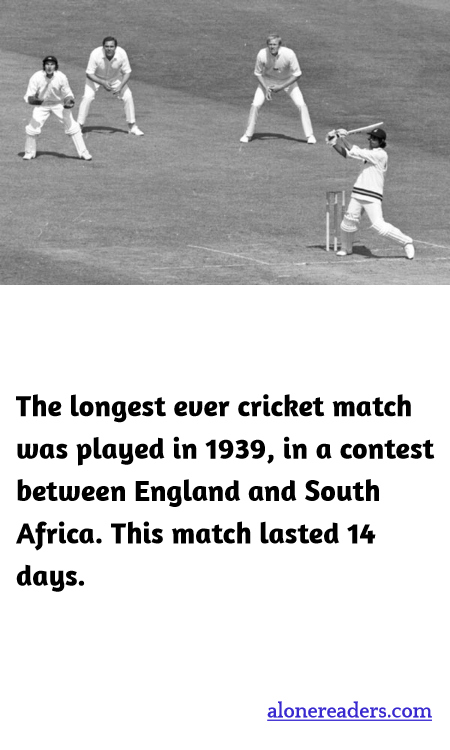
The epic saga of the longest cricket match in history unfolded over fourteen days in 1939, featuring a Test match between England and South Africa. This arduous encounter, known for not only its duration but also its dramatic conclusion, was part of a timeless Test series played out at Kingsmead in Durban, South Africa.
Originally, timeless Tests were devised to produce a clear winner, with games continuing until one side emerged victorious, regardless of how many days it took. The 1939 England versus South Africa Test took this concept to an extreme. The match started on March 3, 1939, and continued for six playing days with rest days in between. The nature of the game during this era, generally slower and more deliberate, allowed for such lengthy contests.
England, batting first, posted a substantial total of 316 in their first innings. South Africa responded strongly, scoring 530 runs, thereby taking a significant lead. The English team then returned to bat with determination, accumulating an imposing 654 for 5 declared in their second innings. Set to chase 420 for victory, South Africa ended up scoring 316 for 5.
With England poised for victory and South Africa fighting resiliently, the match, dramatically, had to be called off on the tenth day of actual play (March 14, 1939) due to relentless rain that had made conditions unplayable. Additionally, the English team had a scheduled train to catch the next day to return to their ship bound for home, which added a practical cap to the seemingly unending game. Consequently, the match concluded without a result, and the series ended drawn at 0-0.
This timeless Test remains one of cricket’s unique anecdotes, symbolizing an era where the game embraced a spirit of endless possibility. However, the match's drawn-out duration and the logistical demands it placed upon players and schedules led to the eventual abandonment of timeless Tests in 1947. Today, the 1939 England-South Africa match stands as a testimony to cricket's rich history and its evolution into the more dynamic forms of the game seen today.
