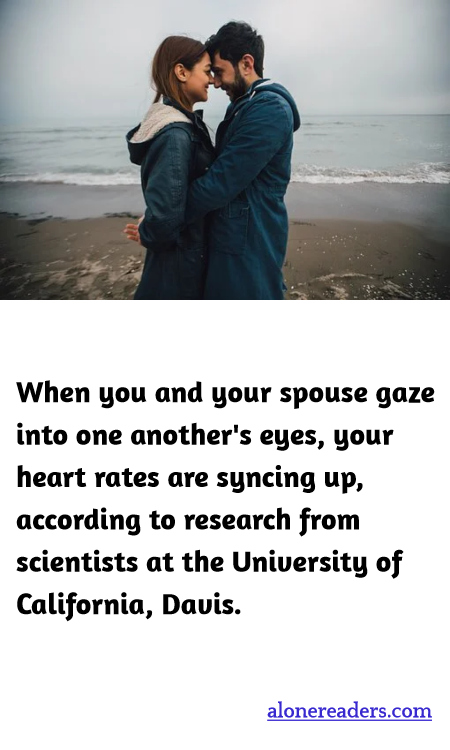
When two people in love look intently into each other's eyes, it's not just a poetic or romantic gesture. Scientific research from the University of California, Davis has shown that this simple act can actually lead to the synchronization of their heart rates. This phenomenon underscores the deep and profound connection that can exist between couples, offering a fascinating glimpse into the physiological effects of emotional intimacy.
The study involved couples who were asked to sit close to each other and gaze into each other's eyes for three minutes without looking away or speaking. The results were compelling as researchers observed that the heart rates of each pair synchronized significantly during this experiment. This synchronization did not occur when individuals stared into the eyes of strangers or when they were not making direct eye contact with their partners, indicating that the connection is specific to romantic partners and the act of mutual gaze.
This heart rate synchronization may stem from what is known as "physiological mirroring," a process where individuals unconsciously mimic the physical state of another person during interactions that involve empathy, emotional attunement, and deep understanding. In the context of romantic relationships, this mirroring can enhance emotional bonds and contribute to a deeper sense of unity and partnership.
The implications of this research are profound, not just for understanding the science of love, but also for enhancing the quality of intimate relationships. Couples might use such findings to reconnect by simply sharing moments of sustained eye contact. This could serve as a powerful, yet simple, tool to maintain and deepen connections, particularly in our modern world where distractions are numerous and sustained focused attention is often scarce.
Further exploration into how these physiological phenomena influence relationship satisfaction and longevity could provide more strategies for supporting both new and long-standing relationships. While the synchronization of heart rates is just one piece of the complex puzzle of human relationships, it serves as a reminder of the powerful impact of our interactions on our physical states.
