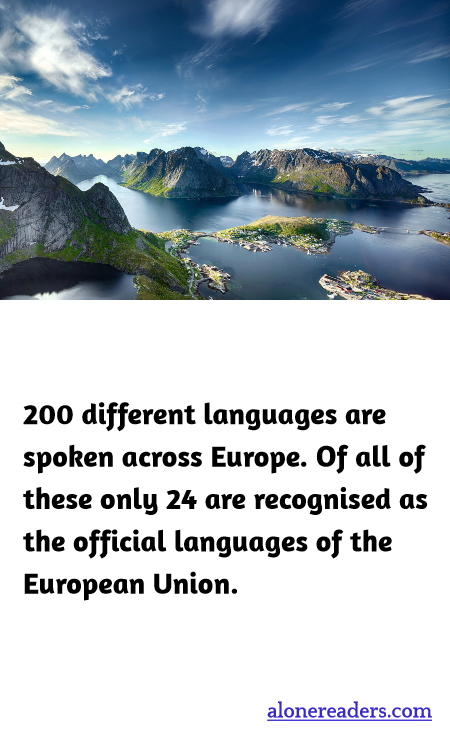
Europe is a remarkable tapestry of languages, reflecting its rich cultural diversity and complex history. Across the continent, over 200 different languages are spoken, each adding a unique thread to the European identity. However, despite this linguistic diversity, only 24 languages are officially recognized by the European Union (EU).
These 24 official languages carry a special status in the EU, ensuring that the institution’s documents, regulations, and directives are accessible to its citizens in their native language. This approach aligns with the principle of democratic participation and transparency, allowing citizens from different member states to participate fully in the European project. It includes widely spoken languages such as English, French, and German, as well as less widely spoken languages like Maltese and Gaelic.
The policy of multilingualism in the EU serves not only to facilitate communication and legislative clarity but also to promote cultural heritage and mutual respect among its members. It's a recognition that the understanding and appreciation of linguistic diversity can contribute significantly to social cohesion and intercultural dialogue within the EU.
Despite the existence of 24 official languages, the EU faces challenges related to language policy, especially in managing the operational and financial implications of such a multilingual setup. Translation and interpretation services in the EU are vast and complex, requiring significant resources to maintain efficiency and effectiveness.
Additionally, the languages recognized officially by the EU are just a small portion of the linguistic mosaic in Europe. Many regional and minority languages such as Basque, Catalan, and Sami are spoken by communities within the EU but do not hold official status at the EU level. This creates a dialogue about the representation and preservation of these languages, which are integral to Europe’s cultural heritage and identity.
The future of linguistic policy in the EU may involve balancing the push for efficiency and unity with the need to preserve and celebrate its linguistic diversity. As globalization and technology continue to reshape how people communicate, the role of language in preserving cultural identity while fostering integration and understanding remains a dynamic and evolving challenge.
Ultimately, the story of languages in Europe is one of plurality and endurance. It illustrates how languages transcend simple communication to embody the traditions, memories, and identities of the people who speak them, holding the continent together in their rich and intricate weave.
