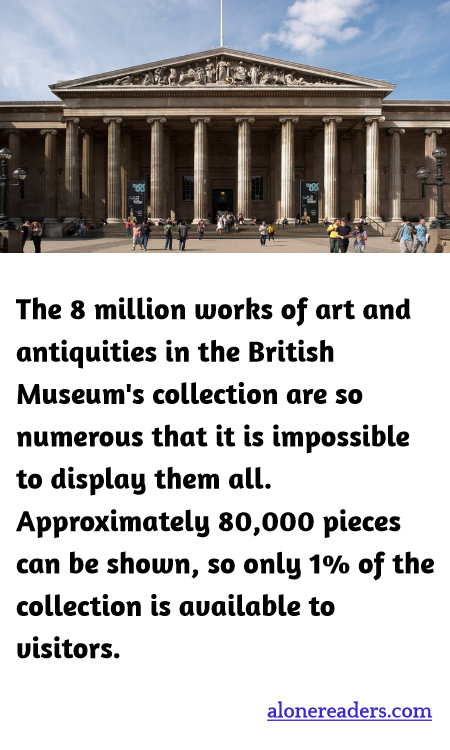
The British Museum, located in the heart of London, is home to a staggering 8 million works of art and antiquities from around the world, encompassing a vast panorama of human history, culture, and artistry. This immense collection includes priceless objects such as the Rosetta Stone, the Elgin Marbles, and Egyptian mummies, attracting millions of visitors each year. However, despite its vast size, the building and exhibition spaces can only accommodate about 80,000 pieces at any given time. This means that only about 1% of the entire collection is on display, with the remaining 99% held in storage.
This limitation is primarily due to space constraints and the need to preserve sensitive artifacts that require specific environmental conditions to prevent deterioration. Additionally, the sheer breadth of the collection means that curatorial decisions must be made about which objects are exhibited and which are not, often based on themes, significance, and conservation needs. As a result, many extraordinary items are not visible to the public and can only be accessed by scholars and researchers under special circumstances.
The museum periodically rotates its exhibitions, allowing different pieces to be displayed and providing returning visitors with new experiences and insights. This rotation also helps in the conservation effort, as it limits the exposure of vulnerable objects to light and environmental fluctuations that could cause damage.
Moreover, the museum has embraced digital technology to make its hidden treasures more accessible to the global public. Through high-resolution imaging and virtual tours, online visitors can explore parts of the collection that are not on physical display. This digital expansion serves educational purposes and helps to democratize access to the museum’s vast resources.
Despite these efforts, the fact that only a fraction of the British Museum's holdings can be displayed at any one time highlights the challenges that large museums face in managing extensive collections. It raises important questions about how museums should balance public access with conservation and how they can best use technology to enhance understanding and appreciation of human cultural heritage.
