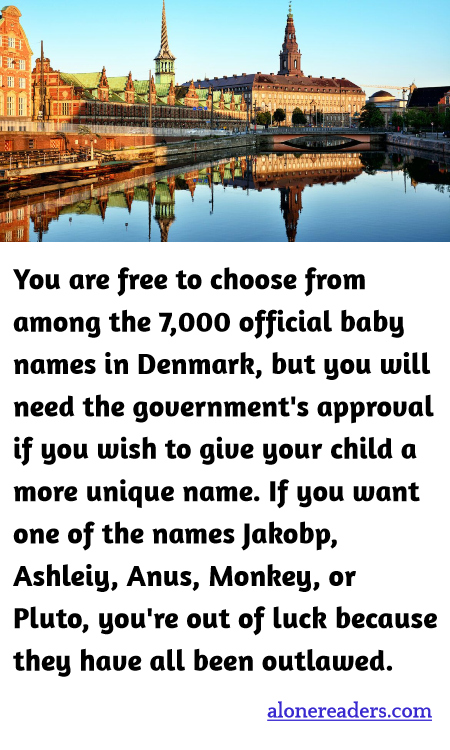
In Denmark, the process of naming a child comes with a unique set of rules that are quite distinctive compared to other countries. The Danish government maintains a pre-approved list of about 7,000 baby names that parents can choose from. These names are generally selected to ensure that they adhere to cultural and linguistic relevance and consistency. The list helps to prevent names that could be considered demeaning or odd within the Danish society.
However, Danish parents who wish to name their child something outside of this list must seek government approval. This involves submitting an application to a special committee that assesses the proposed name against a set of criteria, including appropriateness, potential for bullying, and the likelihood of mispronunciation, among other factors. This system is designed to protect children from potential ridicule or disadvantage throughout their lives due to their names.
Names like Jakobp, Ashleiy, Anus, Monkey, and Pluto, for example, have been rejected and are banned under this framework. Each of these carries implications or associations that could negatively impact a child's social life and self-esteem. Jakobp and Ashleiy are modifications of more traditional names and are disallowed probably due to their unconventional spellings that deviate too far from linguistic norms. Anus, Monkey, and Pluto, on the other hand, might invoke negative imagery or unnecessary attention that could lead to bullying or embarrassment.
This unique approach to baby naming reflects Denmark’s broader dedication to societal welfare and cultural integrity. It safeguards children from being saddled with names that could hinder their social interactions or be deemed inappropriate. Furthermore, it preserves the linguistic heritage of the nation, ensuring that the evolution of names remains respectful and meaningful within the Danish linguistic and cultural contexts. While some might view this as an imposition on personal freedom, many Danes appreciate this measure as a thoughtful investment in the well-being of their children’s future in society.
