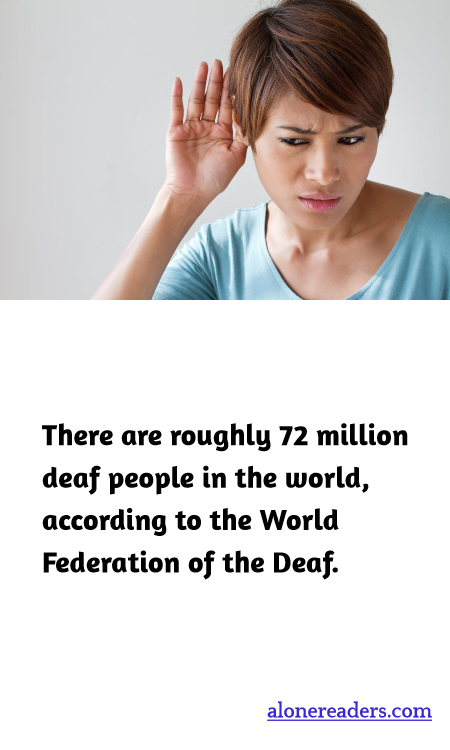
The fact that there are approximately 72 million deaf individuals globally reveals a significant demographic, one that faces unique challenges and brings diverse perspectives. The World Federation of the Deaf (WFD) estimates that among these millions, a vast array utilizes sign language as their primary mode of communication. This statistic not only highlights the importance of acknowledging and supporting these languages but also underscores the need for greater accessibility and inclusion in various aspects of society from education to employment.
Despite advancements in technology and increased awareness about the needs and rights of the deaf community, many barriers still exist. Educational resources, for instance, are often not designed with deaf and hard-of-hearing individuals in mind. The underrepresentation in media and other public domains continues to be an issue, hindering a broader social acceptance and understanding of deaf culture and sign languages. Moreover, within the workforce, deaf individuals can encounter significant obstacles due to perceived limitations on their abilities and a lack of adequate accommodations.
Globally, the rights and integration of deaf people vary significantly. In some countries, there are comprehensive policies that promote inclusion, whereas in others, deaf individuals continue to fight for basic access to information and services. This disparity not only affects the quality of life of deaf individuals but also limits their opportunities for personal and professional growth.
Efforts by organizations such as the WFD are crucial when it comes to advocacy and change. They work tirelessly to ensure that the rights of deaf people are protected and that there is an increase in international awareness and solidarity within the global community. Their efforts also extend to the promotion of sign languages, emphasizing their importance not just as a means of communication, but as a critical aspect of cultural and linguistic identity for deaf individuals.
Looking forward, it's essential for both governmental and non-governmental organizations to push for policies that enhance accessibility, ensure equal opportunities, and respect for deaf individuals. This includes education in sign language as part of school curriculums, provision of sign language interpreters in public services, and stronger representation of deaf individuals in media and politics. Public awareness campaigns can also play a pivotal role in changing perceptions and fostering an environment of inclusion.
Understanding and responding to the needs of the deaf community is not just a matter of social justice but also of enriching the social fabric. Every individual, regardless of their hearing ability, has unique contributions to make, and a society that supports and includes its deaf citizens is all the richer for it.
