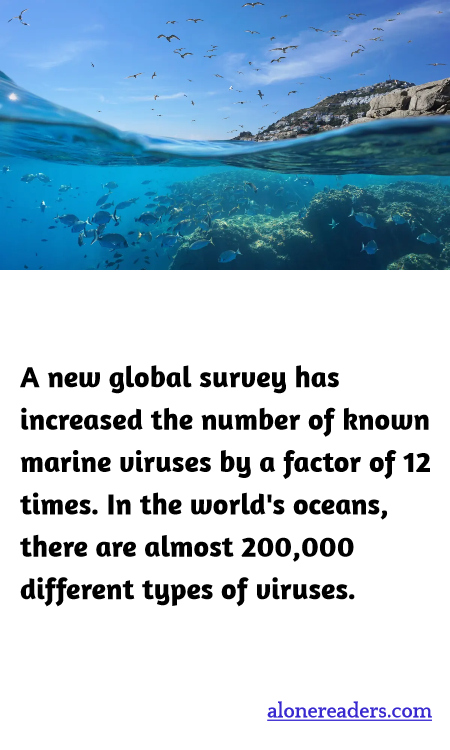
The exploration of the world's oceans has unveiled a surprising and expansive catalog of marine viruses, enriching our understanding of the underwater ecosystem more than ever before. A groundbreaking global study has led to the discovery that the count of known marine viruses has escalated dramatically, revealing nearly 200,000 different types now identified, a steep increase from previous estimates.
This exponential growth in known virus types highlights the vast biological diversity hidden beneath the ocean's surface and signifies how little we knew about this aquatic realm until now. Marine viruses, despite their microscopic size, play crucial roles in influencing oceanic ecosystems. They are pivotal in regulating the population of other marine organisms, which in turn impacts nutrient cycling, carbon sequestration, and the overall health of the marine environment.
Viruses are known to infect all life forms; thus, the sheer variety of viruses implies a complex web of ecological interactions. By controlling the population dynamics of bacteria and other microorganisms, viruses ensure that no single species dominates the marine environment, thereby maintaining its diversity and stability. This balancing act is vital for nutrient recycling as viruses cause the lysis, or breaking down, of cells, which releases nutrients back into the water, fostering a supportive environment for various forms of marine life.
Moreover, the escalation in identifications of marine viruses enriches our understanding of global biodiversity and has significant implications for climate science. Viruses influence the carbon cycle notably through the infection of bacteria and phytoplankton, often leading to the enhanced absorption and sediment deposition of carbon dioxide. This process, in turn, affects global carbon reservoirs and climate.
Scientific endeavors like these, employing cutting-edge technology and extensive international cooperation, underscore the oceans' profound, yet not fully comprehended impact on global ecosystems and climate patterns. This new insight into the diversity of marine viruses not only opens new avenues for ecological and environmental research but also poses additional questions about the implications of viral activity in the oceans on future climate scenarios.
The ongoing study and classification of these viruses are crucial as it will provide deeper insights into marine biology and the interactions between different species, which are essential for understanding and protecting ocean health. As we continue to unveil the mysteries held by the world’s oceans, we can better appreciate the complexity of life on our planet and the intricate connections that sustain it.
