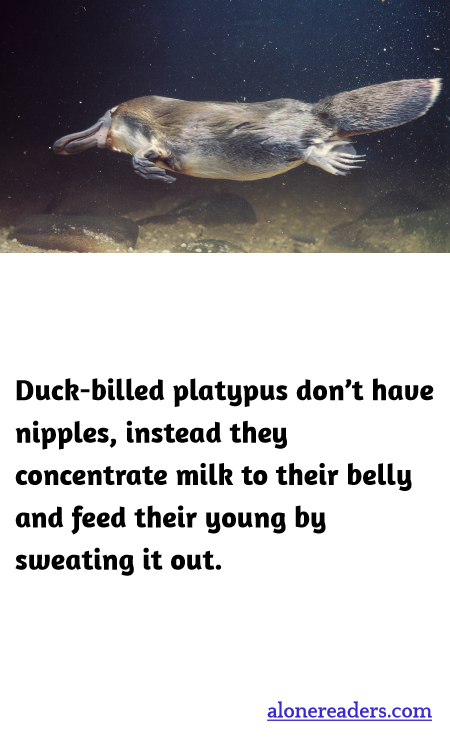
The duck-billed platypus, native to eastern Australia and Tasmania, is an extraordinary creature for numerous reasons, its method of feeding its young being just one intriguing aspect. Unlike most mammals that possess nipples to nurse their offspring, the platypus lacks these entirely. Instead, it has developed a unique method of lactation that aligns with its status as one of the only five extant species of monotremes, or egg-laying mammals.
Mother platypuses secrete milk from mammary gland ducts that open onto the surface of the skin. The skin in the area of the mammary glands thickens and the milk is then secreted onto this area of the belly. The milk pools in the grooves of their skin, allowing the young, called "puggles," to lap it up. This method of milk delivery can be thought of as the platypus "sweating" out its milk, although it's a far cry from the way humans and most other animals sweat.
This milk secretion method raises interesting questions about the evolution of lactation. It's believed that early mammals may have fed their young by similar means before the development of nipples. The milk of the platypus contains more fat and protein compared to that of other mammals, likely needed to support the rapid growth of the puggles. Furthermore, it has been found that platypus milk contains a unique protein with antibacterial properties, suggesting an adaptation to protect the vulnerable young from potential pathogens during their development.
The reproductive process of the platypus is also notably distinct. They lay eggs in a burrow, which the mother incubates by curling around them. Roughly ten days later, the eggs hatch, and the puggles, which are initially blind and hairless, begin feeding on the milk secreted by their mother.
These unique features contribute to the biological fascination with the platypus, highlighting a remarkable adaptation that supports the survival and growth of their offspring in the wild. The ongoing study of such an unusual method of feeding helps deepen the scientific understanding of reproductive and evolutionary biology.
