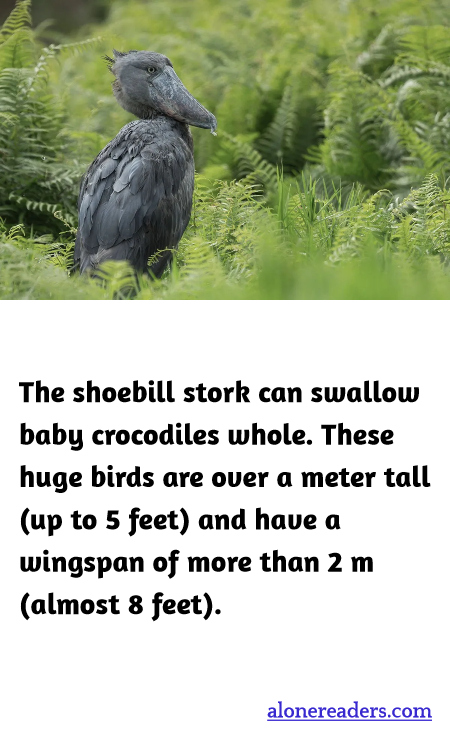
The shoebill stork, an impressive bird native to the swamps of East Africa, boasts an almost prehistoric appearance that is as striking as it is distinctive. Standing over a meter tall, with some individuals reaching heights of up to 5 feet, the shoebill commands attention not only due to its size but also because of its massive bill, shaped like a shoe, which it uses to remarkable effect in its hunting practices. This extraordinary bird has evolved a specialized diet that includes a variety of sizeable aquatic creatures, notable among which are baby crocodiles, which the shoebill is capable of swallowing whole.
With a wingspan that stretches almost 8 feet, the shoebill utilizes its powerful wings to patiently stalk its prey in the dense, waterlogged marshes. The bird’s hunting technique is a marvel of patience and precision. It can stand motionless for long periods, blending into the tall reeds and grasses that characterize its habitat, before launching a swift and decisive attack on unsuspecting prey. The shoebill’s large and sharp-edged bill is perfectly adapted for catching and holding onto slippery and squirming creatures like fish, snakes, and the aforementioned young crocodiles.
Despite its fierce hunting capabilities and intimidating presence, the shoebill stork remains a vulnerable species, with habitat loss and human disturbance posing significant threats to its survival. The bird's reliance on specific wetland environments makes it particularly susceptible to the impacts of climate change and wetland drainage for agriculture. Conservation efforts are critical in safeguarding the remaining populations of this unique bird, emphasizing the importance of protecting and restoring wetland habitats.
The shoebill stork captures human intrigue not only for its unusual dietary habits and significant size but also as a symbol of the wild and often unexplored wetlands of Africa. Efforts to study and protect this bird contribute to broader environmental conservation initiatives that benefit entire ecosystems and the myriad forms of life they support. Understanding and preserving such spectacular wildlife is crucial, ensuring that future generations may also witness the remarkable shoebill stork in its natural setting.
