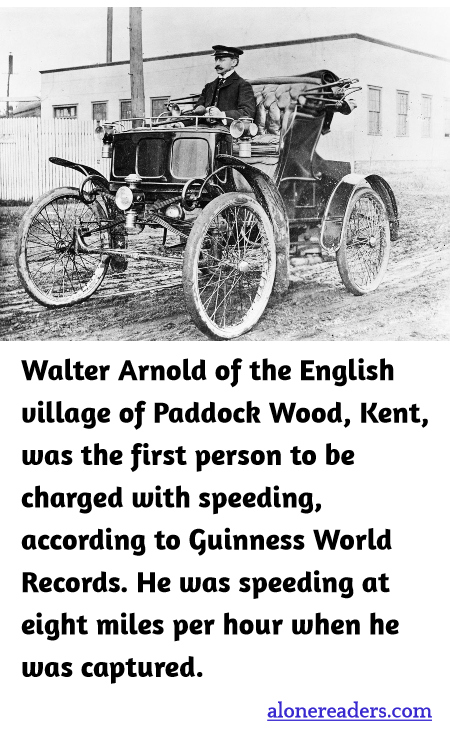
In the history of motoring, some milestones mark significant shifts, not just in technology but also in legal and social norms. One such overlooked but pivotal moment occurred in 1896. Walter Arnold of the village of Paddock Wood, Kent, notably earned the distinction of being the first person ever charged with speeding. This might sound almost charming to our modern sensibilities, used as we are to speed limits that routinely permit much higher speeds, but Arnold's transgression was, in its time, taken quite seriously.
At the heart of this historical anecdote is the fact that Arnold was traveling at a speed of 8 miles per hour—well over the prevailing speed limit of 2 miles per hour. At this time, the automotive industry was still in its infancy, and the laws of the road were struggling to keep pace with rapid technological advancements. The prevailing speed regulations were embodied in what was known as the Locomotive Acts or the "Red Flag Acts." These required any road locomotive, which included automobiles, to adhere to strict speed limits—4 miles per hour in the country and 2 miles per hour in towns. Additionally, each vehicle needed a crew of three: the driver, an engineer, and a man with a red flag walking ahead to warn horse-drawn vehicles of the oncoming motorized transport.
Walter Arnold’s historic speeding occurred when he was caught tearing through the streets of Paddock Wood at four times the legal speed limit without the requisite red flag bearer. His apprehension by a policeman who had to give chase on a bicycle encapsulates a fascinating moment of transition between old and new transport modes. The penalty for Arnold’s haste was a fine of one shilling plus costs.
This incident not only underscores the novelty and public curiosity surrounding early automobiles but also illustrates the broader challenges societies face when integrating new technologies. Arnold's brush with the law highlighted the impracticalities of existing regulations, arguably contributing to changes that saw the Locomotive Acts repealed and replaced later that year by the Locomotive Act of 1896, which raised the speed limit to 14 miles per hour and abolished the requirement for a man with a red flag.
This quaint yet seminal event symbolizes a key turning point in transportation history, where the potential of the automobile began to be fully recognized and the regulations adapted to accommodate a faster-paced future. It serves as a reminder of how society and laws evolve, often catalyzed by innovations that challenge the status quo, pushing boundaries both literally and metaphorically. Walter Arnold’s tale of speeding may now provoke a smile, but it also invites reflection on the continuous interplay between technology and legality in the shaping of modern society.
