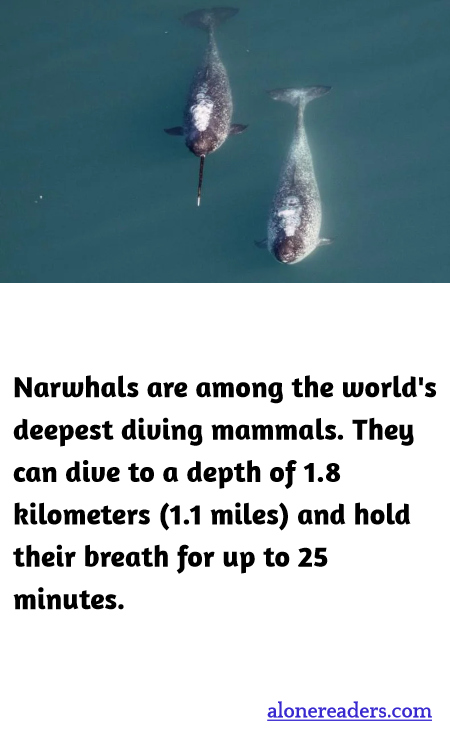
Narwhals, often referred to as the "unicorns of the sea" due to their distinctive long, spiraled tusk, are not only notable for their unique appearance but also for their impressive diving capabilities. These remarkable creatures inhabit the cold waters of the Arctic around Greenland, Canada, and Russia, thriving under conditions that would be challenging for many other species.
Their ability to dive to depths of approximately 1.8 kilometers (1.1 miles) is particularly astounding. This deep-diving skill is crucial for their survival, as it allows them to reach abundant food sources like squid, shrimp, and fish that reside at such depths. These dives are not brief ventures; narwhals can hold their breath for up to 25 minutes, a trait that is essential for navigating and foraging in the deep, dark waters of the Arctic.
The physiological adaptations of narwhals to support these deep dives are equally fascinating. They have a flexible ribcage that allows their lungs to collapse under high pressure, reducing the risk of decompression sickness, or "the bends," a common hazard for many deep-diving animals including humans. Furthermore, their blood and muscles have a high affinity for oxygen, which is critical for supporting extended periods without breathing.
However, the ability of narwhals to dive to such extreme depths also brings them into dangerous proximity to human activities such as shipping and commercial fishing. Additionally, the effects of climate change, such as the reduction of sea ice and shifts in sea temperature, pose significant threats to their natural habitat and food sources. These changes can affect the availability of prey in deep water, potentially altering narwhal diving behaviors and impacting their overall health and survival.
In conclusion, narwhals are not only fascinating marine mammals due to their unique tusks, but also because of their extraordinary diving abilities, which showcase their adaptation to one of the planet's most extreme environments. Protecting these majestic creatures and their habitats is crucial as they face increasing threats from human activities and environmental changes. Understanding and appreciating the capabilities and challenges of narwhals is an important step in ensuring their survival for generations to come.
