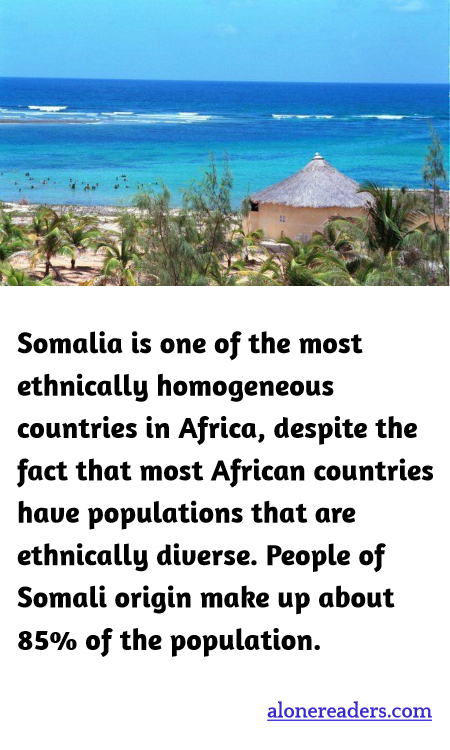
Situated in the Horn of Africa, Somalia presents a unique case in the African context due to its relatively homogeneous ethnic landscape. Unlike many African nations characterized by a mosaic of tribes and ethnic groups, Somalia is predominantly inhabited by people of Somali origin, who constitute about 85% of the population. This relative ethnic homogeneity has played a significant role in the country’s social and cultural identity, fostering a shared language—Somali—and common cultural practices across much of the country.
The Somali people are traditionally divided into clans and sub-clans. The clan system, which has been a prominent aspect of Somali culture, operates as a vital component of social and political organization. Each clan claims descent from a common ancestor, and this lineage influences everything from daily social interactions to political arrangements. The major clans include the Darod, Hawiye, Dir, and Rahanweyn, and numerous sub-clans exist within these larger groups. Loyalties to clan and sub-clan continue to be a powerful force in Somali society, sometimes overshadowing national allegiance.
The homogeneity of Somalia, however, has not insulated it from conflict. Since the collapse of the central government in 1991, Somalia has grappled with civil war, insurgency, and fragmentation. The strong clan identities have often contributed to these conflicts, with rivalries and grievances between different clans escalating into violence. In addition, the absence of a unifying national government for decades allowed these clan divisions to deepen, complicating peace and reconciliation processes.
Somalia’s demographic setup does offer potential advantages, such as facilitating the implementation of common educational and linguistic policies that are often challenging in more ethnically diverse nations. A shared language and cultural heritage can promote national cohesion and simplify official communications. Moreover, in peaceful circumstances, a homogenous population might find it easier to reach consensus on national issues, potentially accelerating political and social developments.
In conclusion, while Somalia’s ethnic homogeneity sets it apart in a continent as diverse as Africa, it also illustrates that ethnic similarity alone does not necessarily preclude internal conflict. The interplay between clan loyalties and the broader national identity continues to shape Somalia’s socio-political landscape. As the country works toward stability and rebuilding, understanding and integrating the complex clan dynamics into governance will be crucial for achieving lasting peace and unity.
