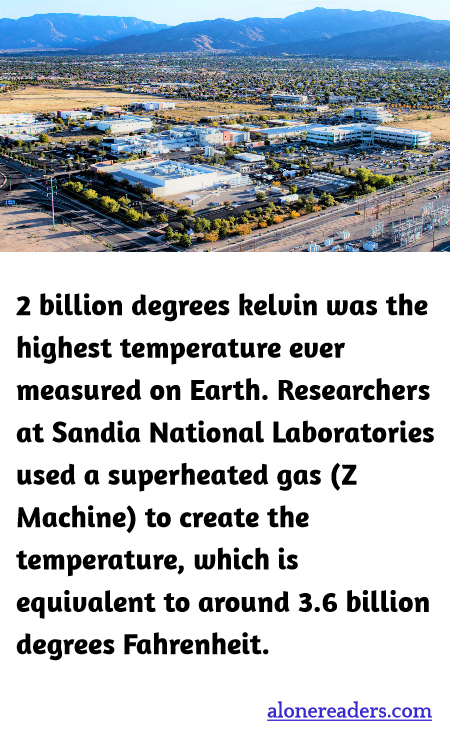
Achieving a temperature of 2 billion degrees Kelvin, approximately 3.6 billion degrees Fahrenheit, marks one of the most astonishing scientific feats to date. This record-breaking temperature was reached by researchers at Sandia National Laboratories, a facility renowned for its cutting-edge research and technological advancements. The core instrument behind this achievement is the Z Machine, an apparatus designed to simulate the extreme conditions found within stars and nuclear explosions by quickly releasing over 20 million amperes of electricity through a small amount of gas.
The purpose of reaching such an extreme temperature was not just to set a record but to advance our understanding of material physics under extraordinary conditions. This experiment has significant implications for nuclear fusion research, an area that promises to provide a long-term sustainable source of clean energy. Researchers believe that replicating the conditions at the core of the sun, where hydrogen atoms fuse under immense heat and pressure to form helium, could lead the way to developing a practically limitless energy source with minimal environmental impact.
The scientific community and beyond have marveled at this achievement because it pushes the boundaries of what’s technically feasible and expands the limits of human knowledge about high-energy density physics. The experiment also paves the way for new research into how materials behave under such extreme conditions, which is crucial for further advancements in various fields including astrophysics and energy production.
Moreover, the insights gained from experiments like these at the Z Machine contribute directly to enhancing national security, ensuring the reliability and effectiveness of the nation’s nuclear arsenal. By simulating conditions similar to those during nuclear explosions, but in a controlled environment, researchers can better understand the mechanics of nuclear weapons and improve their safety, reliability, and precision.
The accomplishment of reaching such a high temperature is not just a testament to the ingenuity and determination of the scientific team at Sandia but also serves as a beacon of potential technological and scientific advancements that could arise from fully harnessing nuclear fusion as a power source. As research continues, the reverberations of this achievement will likely echo throughout science, technology, and industry, heralding a new era of energy usage and material science.
