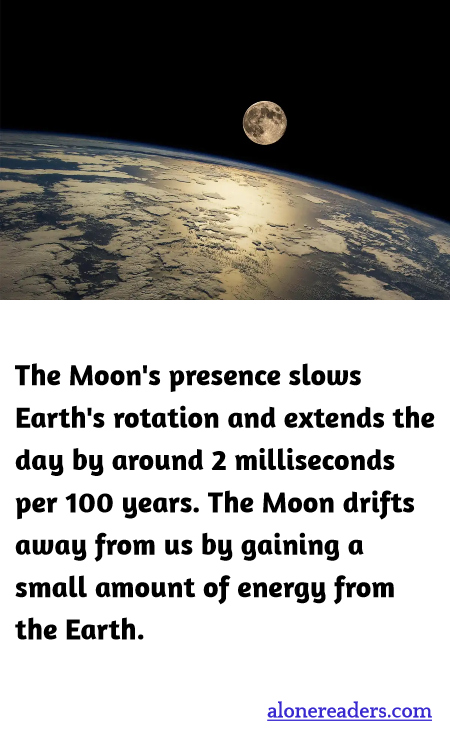
The Moon, Earth's only natural satellite, plays a crucial role in our planet's celestial mechanics, influencing everything from the tides to the length of a day. One fascinating aspect of this relationship is the impact the Moon has on the rate of Earth's rotation. As it orbits Earth, the gravitational pull between Earth and the Moon results in tidal forces that affect Earth's rotation. Over centuries, these interactions are actually causing Earth's rotation to slow down, extending the length of a day by approximately 2 milliseconds every 100 years.
This minute change might seem trivial, but its cumulative effect over millions of years can be significant, potentially altering the Earth’s natural rhythms and cycles. The mechanism behind this phenomenon involves the transfer of energy between Earth and the Moon. As the Earth spins, it exerts gravitational pull on the Moon, creating a bulge in the ocean that tries to align with the Moon. Because the Earth rotates faster than the Moon orbits, the bulge ends up slightly ahead of the Moon. The gravitational pull between the bulge and the Moon then tugs at the Moon, boosting its momentum and causing it to move into a higher orbit.
This dynamic process is known as tidal acceleration and it not only affects Earth's spin but also causes the Moon to drift slightly farther away from Earth each year — approximately 3.8 centimeters annually. Over long periods, this increasing distance can have implications for both the Moon and Earth, potentially affecting everything from the Earth's climate to the appearance of solar and lunar eclipses.
As scientists continue to monitor these subtle yet profound changes, they gain insights not only into the mechanics of our own planet-moon system but also into the dynamic interactions in other celestial bodies in the universe. Understanding these processes helps us not only predict future changes in Earth's environment but also enhances our knowledge of how planetary systems throughout the cosmos may evolve over time. While the gradual extension of our days and the Moon's slow drift away might not immediately impact life on Earth, these processes underscore the dynamic and ever-changing nature of the cosmos we inhabit.
