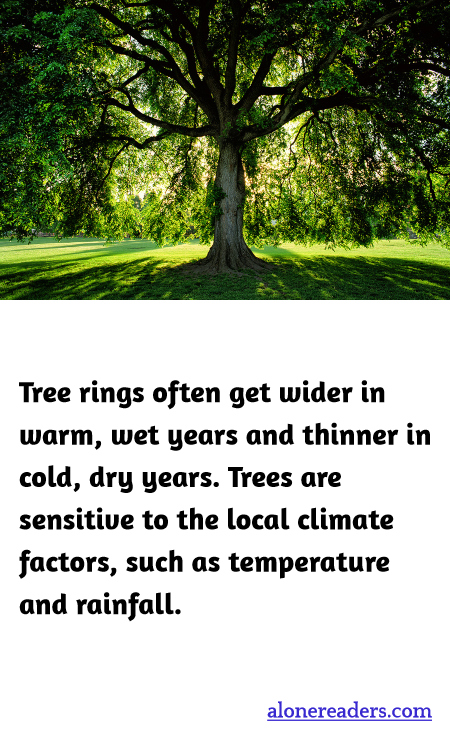
Tree rings, also known as growth rings, provide valuable insights into the past climate conditions and can be a crucial tool for environmental studies. Each ring on a tree can tell a story about what the climate was like during that year of the tree’s life, acting much like a natural, living archive of historical climate patterns.
During warm and wet years, trees often experience optimal growing conditions. Ample water availability and favorable temperatures facilitate the photosynthesis process, leading to more vigorous growth. Consequently, the tree rings from these years tend to be wider, indicating robust health and abundant resources. Conversely, in years when the climate is colder and drier, trees may struggle to grow. Limited water and less favorable temperatures can inhibit the tree’s ability to perform photosynthesis effectively. This stress is reflected in the formation of thinner growth rings for those challenging years.
Scientists can analyze these rings to reconstruct past weather conditions and draw conclusions about historical climate patterns. Dendrochronology, the scientific method of dating tree rings, not only helps in understanding the past climate but also assists in dating the order of past events, providing a chronological framework for historical ecological studies and archeological explorations.
Moreover, studying tree rings helps researchers predict how current and future climatic changes could affect our environment. By understanding the resilience and adaptability of trees under various climatic stresses evidenced through historical data, conservationists can better strategize the protection and preservation of forests amidst changing global weather patterns. This insight is particularly vital in the age of climate change, where extreme weather conditions are becoming more frequent and unpredictable.
Hence, tree rings serve as an essential tool in the realm of environmental research, offering a natural record that not only chronicles the earth’s climatic history but also cues us into potential future climatic phenomena, thereby helping in crafting more informed, sustainable environmental policies and conservation efforts.
