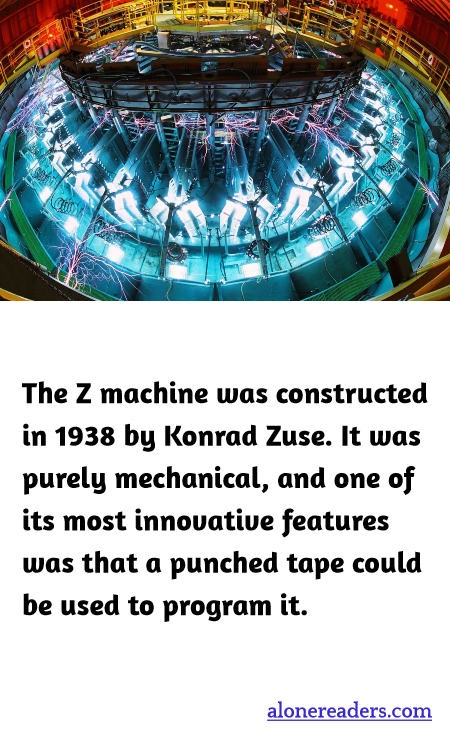
The Z machine, conceived and built in 1938 by German engineer Konrad Zuse, is a significant milestone in the history of computing. What set this machine apart was not just its mechanical nature, but its method of programmability, which utilized punched tape. This innovation marked a crucial development in the evolution of computer technology, representing one of the first instances where an automated process could be directed through pre-configured instructions.
Konrad Zuse, often celebrated for his pioneering contributions to computing, designed the Z machine during a period when the concept of a programmable computer was hardly explored. The use of punched tape was particularly innovative because it allowed for sequences of operations to be fed into the machine, enabling automatic calculations based on a set pre-determined program. This move towards automation and programmability through such a medium was formative for future designs in computing and can be seen as a precursor to more sophisticated data storage and retrieval methods that followed.
The mechanical nature of the Z machine implies that it operated on a system of gears, levers, and possibly other moving parts to perform calculations. While certainly less efficient and much slower than the electronic computers that would emerge in subsequent decades, Zuse’s Z machine laid the groundwork by demonstrating that complex computations could be mechanically automated and programmed externally.
This innovation had a profound influence on the development of subsequent computing models. It paved the way for the transition from mechanical to electronic components in later computing machines, like ENIAC and later the universal Turing machine. Interestingly, the principles of programmability and automation introduced by the Z machine remain at the core of software engineering practices today.
Despite its primitive design by modern standards, the pioneering status of the Z machine as one of the first programmable computers marks it as an invaluable stepping stone in the history of computer science. Zuse's work was foundational, and his ideas have certainly helped to shape the development of the digital world as we know it today.
