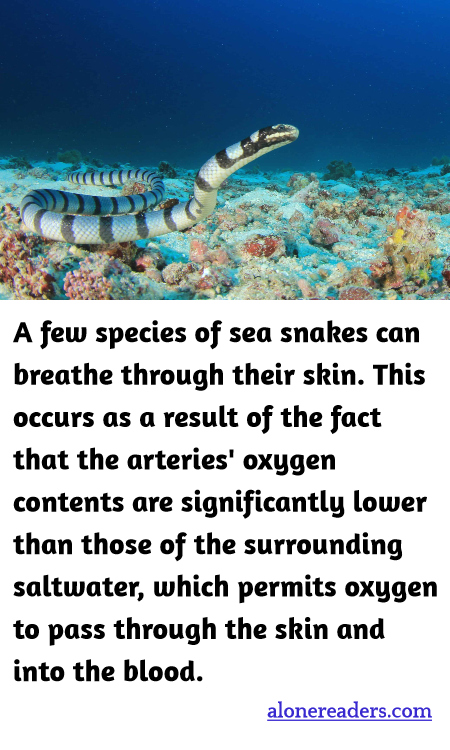
Sea snakes, fascinating creatures of the ocean, possess a unique adaptation that sets them apart in the animal kingdom: some species can breathe through their skin. This incredible ability is not only a marvel of evolutionary biology but also a crucial survival mechanism that allows these reptiles to remain submerged for prolonged periods, thereby avoiding predators and conserving energy.
The mechanism behind this extraordinary respiratory process lies in the relationship between the oxygen content in the snake's arteries and the saltwater environment in which they reside. Typically, the oxygen levels in the blood of these sea snakes are lower than those in the surrounding saltwater. This difference creates a concentration gradient that facilitates the diffusion of oxygen from the water directly through the skin and into the snakes' blood vessels. This diffusion process is aided by the unique structure of their skin, which is more permeable to oxygen than that of other reptiles, and a dense network of blood vessels just below the skin surface, maximizing the area for oxygen absorption.
Moreover, this skin-breathing capability significantly enhances the efficiency of the snakes' respiratory system. While sea snakes still possess lungs and must surface occasionally for air, their ability to absorb dissolved oxygen from the water allows them to spend up to several hours underwater per dive. This adaptation is particularly advantageous for stalking prey or escaping threats in their underwater habitat.
Interestingly, this trait is not uniformly presented across all sea snake species but is more developed in those which spend a significant amount of time submerged. Scientists believe that this evolutionary trait has developed in response to the diverse demands of their aquatic environments, highlighting once again the dynamic nature of evolutionary pressures and adaptations.
The ability of some species of sea snakes to breathe through their skin is a testament to the complex and fascinating adaptations that life has developed over millions of years. It provides an excellent example of how organisms can evolve traits that perfectly suit their environmental niches, ensuring their survival and reproductive success in a constantly changing world.
