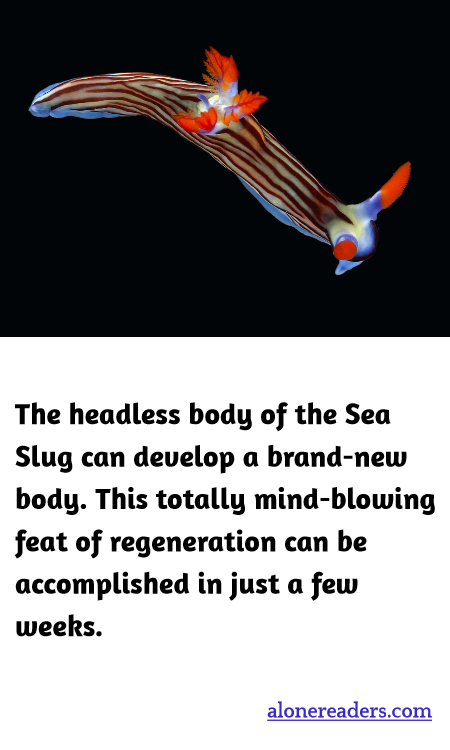
In the world of marine biology, the sea slug stands out for a rather extraordinary ability: it can regenerate its entire body after decapitation. Two species in particular, Elysia cf. marginata and Elysia atroviridis, have caught the attention of scientists for their remarkable regenerative processes. These sea slugs can sever their own heads from their bodies in a process known as autotomy, which is typically a defense mechanism to evade predators.
What follows is not just the healing of a wound but the complete regeneration of their body, including all vital organs, from the remaining head part. This process, which defies the regenerative limits seen in most other animals, can be completed in just a few weeks. The head of the sea slug begins to feed within hours of detachment, even before regrowth starts, relying on photosynthesis performed by internal algal cells temporarily, as the body regenerates.
The ability to regenerate is attributed to a set of stem-like cells which are capable of morphing into various cell types needed to reconstruct muscles, a heart, and other complex tissues. This discovery has profound implications, especially in the field of regenerative medicine and biological research. Understanding how sea slugs can regenerate their entire body could shed light on enhancing regenerative treatments in humans and possibly lead to breakthroughs in healing severe injuries and replacing damaged organs.
The process of finding out exactly how these creatures manage to precisely reconstruct complex body structures could lead to insights into genetic programming and cellular differentiation. It's a line of investigation that could eventually inform tissue engineering and developmental biology, potentially offering strategies for medical therapies that harness similar regenerative abilities.
Moreover, much remains unknown about the specific molecular mechanisms that underlie such extensive regenerative abilities. More research could reveal whether this capability is common in other related species or unique to only a few, and what genes and pathways are crucial for such an unprecedented level of regeneration. The study of sea slugs is a vivid reminder of the myriad forms of life on Earth, each with its own unique set of capabilities and secrets waiting to be unraveled by curious scientists.
