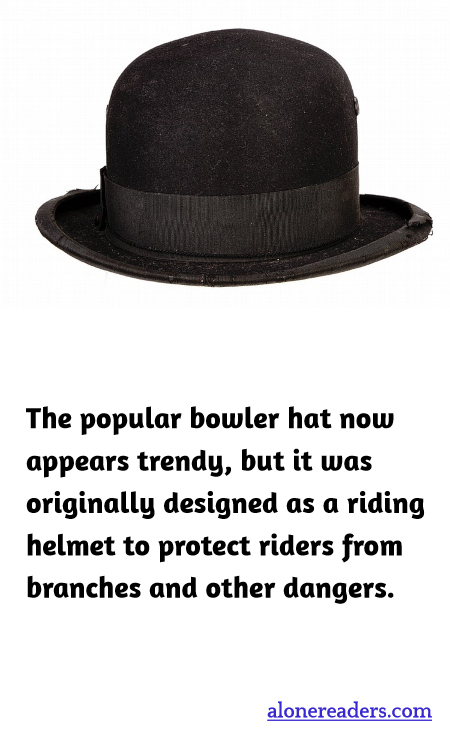
The bowler hat, iconic and distinctly recognizable, has come a long way from its origins in the mid-19th century. Originally designed in 1849 by London hat makers Edward and William Bowler, the hat was commissioned by Edward Coke, a British soldier and politician, to protect gamekeepers’ heads from low-hanging branches while on horseback. This practical beginning is a far cry from the stylish urban accessory the bowler hat is considered today.
The design of the bowler hat was a solution to a practical problem. Gamekeepers in the 19th century often wore top hats, which were easily knocked off by branches or could be crushed during falls. The bowler hat, with its close-fitting, rounded crown and sturdy construction offered a more durable alternative. It was designed to stay snugly on the head, resisting blows from branches and not easily being blown off or crushed.
Quickly after its invention, the bowler hat transcended its rural, utilitarian origins. It became popular in urban settings, particularly among the working and middle classes. Its adoption by city dwellers and businessmen in London marked the transformation of the bowler hat into a symbol of sophistication and a staple of professional attire. In the United States, the hat became associated with the American West, worn by both lawmen and outlaws, further embedding it into the cultural fabric of the era.
By the 20th century, the bowler hat had become a part of the iconic images of Charlie Chaplin’s "The Tramp" and Laurel and Hardy, cementing its place in popular culture. The hat's association with businessmen and bankers in London also persisted, and it evolved into a recognizable part of the city’s financial district’s unofficial uniform.
Today, the bowler hat is seen as a trendy and somewhat retro fashion statement, a symbol of vintage style that harks back to a bygone era. It often appears in fashion shows, historical films, and television series. Despite the shifts in its symbolic meanings and contexts over the years, the bowler hat continues to be a unique and resilient item of clothing, retaining its connection to both British heritage and the pioneering spirit of the American West. Its enduring appeal lies not just in its distinctive shape, but also in its rich history of practicality, style, and cultural significance.
