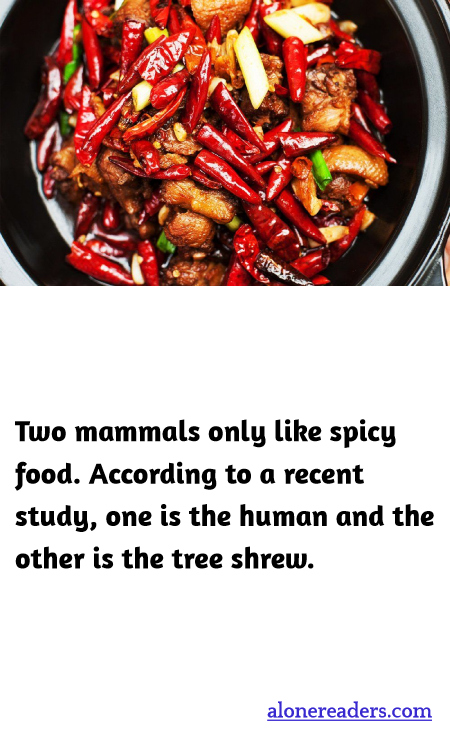
Most mammals steer clear of capsaicin, the component responsible for the fiery sensation in chili peppers, due to its irritating effects. However, a fascinating study reveals that humans are not the only mammals with a penchant for spicy flavors. The tree shrew, a small mammal found in the forests of Southeast Asia, has also exhibited a unique tolerance and even preference for spicy food, much like humans. This anomaly among mammals intrigued researchers, leading to investigations that delve into the biological underpinnings of this trait.
The tree shrew's unusual dietary preference is primarily attributed to a mutation in the species' ion channel receptor, known as TRPV1, which responds to the burning sensation induced by capsaicin. In most mammals, this receptor sends warning signals to the brain about potentially harmful food. In tree shrews, however, this receptor is less sensitive to capsaicin. Geneticists believe this adaptation might help tree shrews exploit a niche where competition for food is less fierce, as fewer animals partake in spicy fare.
Interestingly, humans and tree shrews do not share a close evolutionary path that might directly explain this shared dietary trait. Instead, it's thought that the similar tolerance for capsaicin in both species evolved independently, a phenomenon known as convergent evolution. For humans, the integration of spices into diet has been linked to various factors, including the preservation qualities of spices and the mask of spoilage flavors in pre-refrigeration eras. Moreover, medical studies have occasionally pointed to health benefits of capsaicin, including pain relief and cardiovascular health improvements.
The study’s findings not only shed light on the evolutionary biology of diet in mammals but also highlight the ecological and evolutionary adaptability of the tree shrew. By losing the deterrent that capsaicin poses for other animals, tree shrews have access to a broader range of food sources. This dietary flexibility could be a significant advantage in the survival and evolutionary success of these small mammals. As for humans, our love of spicy food, while not necessarily born of ecological necessity, adds a rich layer to culinary cultures worldwide and illustrates how culture can often be reflected and shaped by biological capabilities. This shared spice tolerance between humans and tree shrews is an intriguing example of how different species can develop similar adaptations for entirely different reasons.
