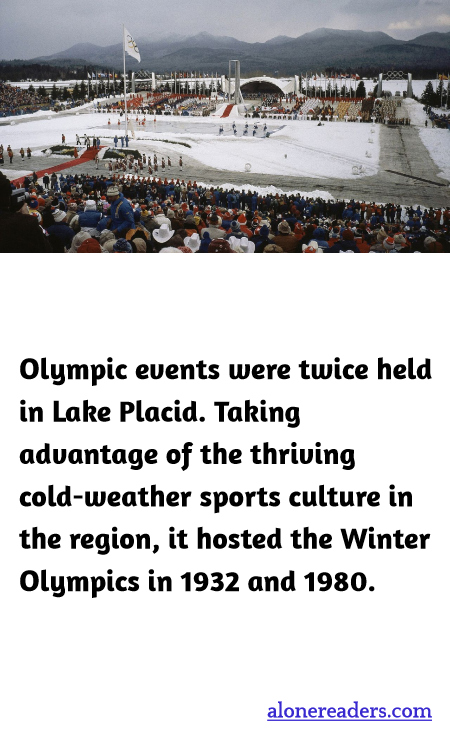
Lake Placid, a small village nestled in the Adirondack Mountains of New York, boasts a significant chapter in the history of international sports: it is one of only three locations worldwide to have hosted the Winter Olympics twice. The first occasion was in 1932 and again in 1980. Both events have not only bolstered Lake Placid’s reputation as a winter sports haven but have also left a lasting imprint on the fabric of the Olympic movement.
The 1932 Winter Olympics marked the third winter games, taking place during the Great Depression, which created significant economic challenges and affected participation. Despite these troubles, the event featured memorable moments and introduced the world to Sonja Henie, who won gold in figure skating at the age of 15. One of the major legacies of the 1932 Games was the promotion of winter sports in the United States and the enhancement of Lake Placid’s facilities.
By the time Lake Placid again welcomed the Winter Olympics in 1980, the world was in a starkly different sociopolitical climate, shadowed by the Cold War. These games became widely memorable for the “Miracle on Ice,” where the American ice hockey team, comprised mainly of college players, triumphed over the seasoned Soviet Union team in one of the most dramatic upsets in Olympic history. Furthermore, the 1980 Games also highlighted the figure skating brilliance of Americans Tai Babilonia and Randy Gardner, although an injury prevented them from completing their events.
The infrastructure improvements made for the 1980 Olympics included the construction of a new ice arena, ski jumps, and updated cross-country ski trails, which have continued to benefit the community and remain in use for training and competitions. The re-use of these facilities underscores a legacy of sustainable sporting development, one that adheres to the Olympic ideal of blending sport, culture, and education.
Today, Lake Placid continues to leverage its Olympic heritage to attract tourists and athletes from around the world. The lasting venues actively host international competitions and training sessions for a variety of winter sports, from biathlon to ice hockey and bobsledding. Moreover, the region has embraced its historical significance by establishing Olympic museums and offering tours of iconic locations from the 1932 and 1980 games.
Hosting the Winter Olympics twice has allowed Lake Placid to illustrate the power of sport in fostering unity, showcasing resilience and inspiring generations. The legacy of the games thrives in every ice rink echo and every ski trail in the region, reaffirming the town’s place in Olympic history. The twin occurrences of the Olympics in Lake Placid reflect not only the evolution of the games themselves but also the enduring spirit of a small town that performed on the world stage against all odds.
