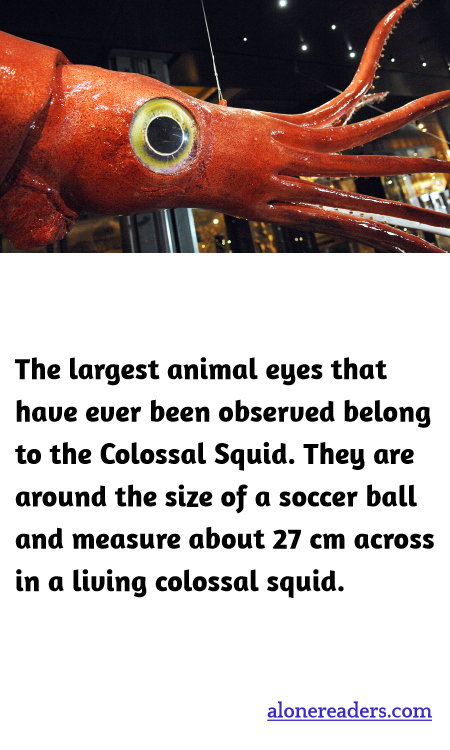
The colossal squid, not just known for its immense size and deep-sea mystique, holds another record: it has the largest eyes ever recorded in the animal kingdom. These marine behemoths, which lurk in the cold, murky depths of the Southern Ocean, have eyes that are roughly the size of a standard soccer ball, measuring approximately 27 cm (11 inches) in diameter. Such size is not just for show; it provides a critical survival advantage in the dark, expansive home of the colossal squid.
The primary utility of these gigantic eyes is enhanced visual capability in the near-total darkness of the deep ocean. Large eyes are adept at capturing even the faintest glimmers of light, such as bioluminescence—light produced by other living organisms—which is common in deep-sea dwelling creatures. This allows the colossal squid to detect both predators and prey at considerable distances, navigating the pitch-black waters with an efficiency that smaller-eyed organisms cannot match.
The evolutionary impetus for such large eyes can be attributed to the squid's arms race with one of its main predators, the sperm whale. These whales are equipped with sophisticated echolocation systems that enable them to detect and hunt squid in the depths. In response, the colossal squid's large eyes likely evolved to spot the incoming predators from far off, giving them a chance to flee and thus improving their chances of survival.
Interestingly, the size of the colossal squid's eyes also contributes to its mystique and the fear it inspires, not just in its natural predators but also in humans. Tales of sea monsters and giant squids have percolated through maritime lore for centuries, often inspired by encounters with unusually large or aggressive specimens. Moreover, the sheer size and alien appearance of the colossal squid's eyes contribute significantly to its portrayal as a near-mythical beast in modern media and literature.
While difficult to study due to their deep-sea habitat and elusive nature, colossal squids occasionally surface, typically when captured in deep-sea fishing nets or found in the stomach contents of sperm whales. These rare occurrences offer scientists a limited but valuable opportunity to study these extraordinary creatures, their unique adaptations, and their place in the oceanic ecosystem.
Therefore, the colossal squid is not just fascinating because of its sheer size, but also because its evolutionary adaptations, like its enormous eyes, spotlight the complex interplay of evolutionary pressures faced by deep-sea organisms. This giant of the ocean depths continues to spark both scientific curiosity and popular intrigue, underscored by each rare observation and encounter.
